
History of the Old Pal
- Origin
- Harry's New York Bar, Paris
- First printed
- 1922, in Harry MacElhone's ABC of Mixing Cocktails
- Credited to
- William "Sparrow" Robertson, sports editor of the Paris edition of the New York Herald
- Family
- Stirred, aperitivo
Harry MacElhone credited the Old Pal to Sparrow Robertson, a colourful American sportswriter in Paris famous for calling everyone "old pal". It combines rye, Campari and dry vermouth in equal parts. It's drier and spicier than a Negroni or Boulevardier and remains a bartender favourite.
Fun Facts
- MacElhone's original used Canadian whisky.
- It's essentially a Boulevardier with dry vermouth and rye.
- It's sometimes served on the rocks.
Variations
| Variation | What changes |
|---|---|
| Boulevardier | Bourbon, sweet vermouth |
| Negroni | Gin, sweet vermouth |
Old Pal FAQ
What is in an Old Pal?
Rye, Campari and dry vermouth.
How is it different from a Boulevardier?
It uses rye and dry vermouth instead of bourbon and sweet vermouth.
Who created it?
It's credited to Sparrow Robertson and printed by Harry MacElhone in 1922.
What glass is an Old Pal served in?
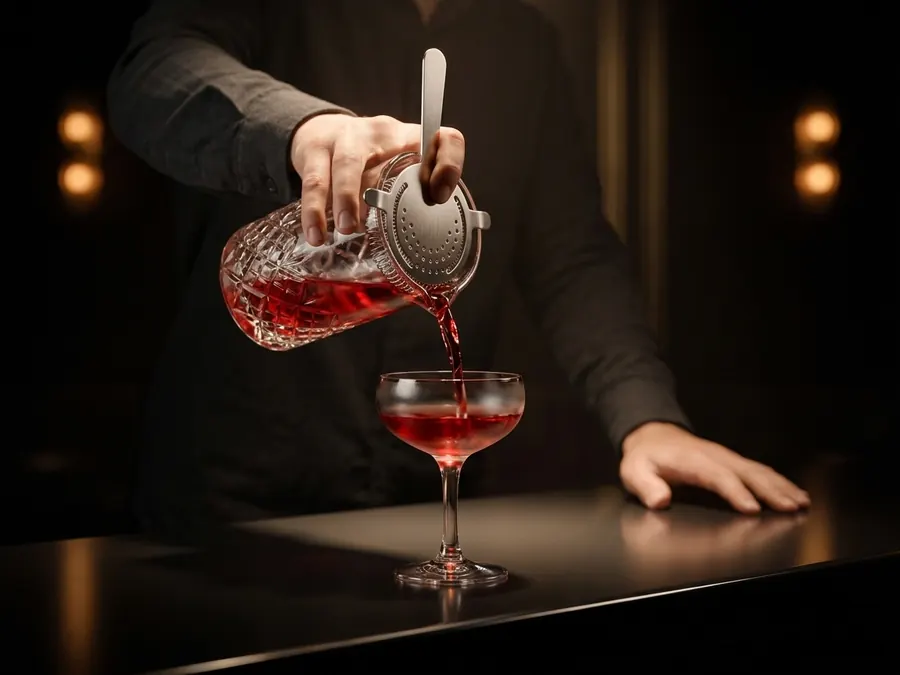
A coupe. The stem keeps your hand away from the cold drink, and the curved rim makes it far harder to spill than a V-shaped martini glass.
Is an Old Pal shaken or stirred?
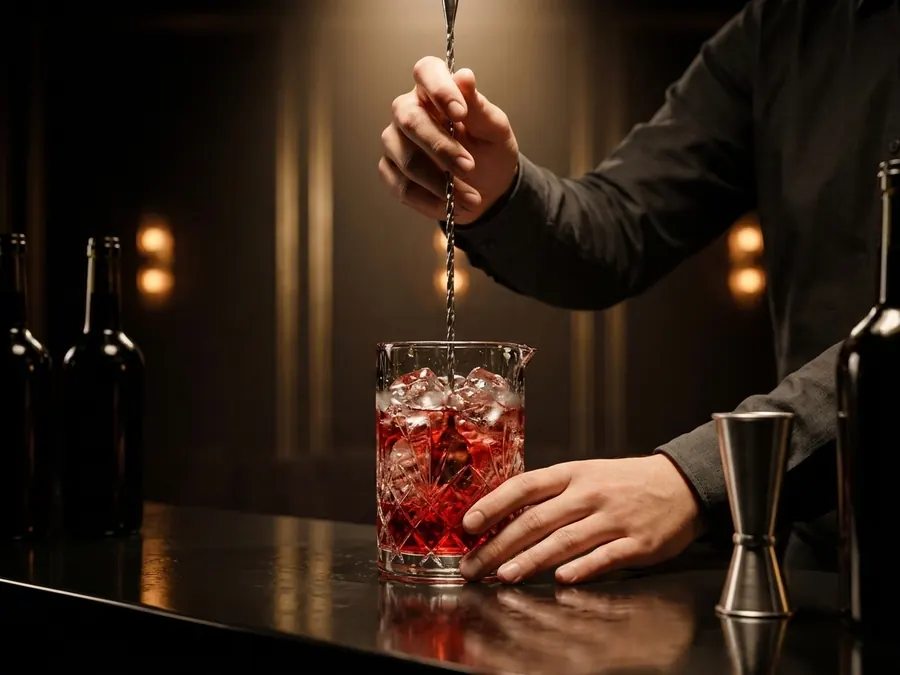
Stirred. It contains only spirits and modifiers, so stirring chills and dilutes it while keeping it clear and silky.
How strong is an Old Pal?
About 21% ABV after dilution, or roughly 1.5 US standard drinks (21 g of alcohol) per serve.
How many calories are in an Old Pal?
Roughly 179 kcal per drink, most of it from alcohol.
Can I make an Old Pal without rye whiskey?
Yes. Bourbon is the closest substitute, though the drink will taste different.


