
History of the Rosita
- Origin
- United States
- In print
- Late 20th century
- Champion
- Gary Regan
- Family
- Spirit-forward, aperitivo
The Rosita is a tequila drink in the Negroni family, made with Campari and both sweet and dry vermouth. Its origin is unclear: it surfaced in American bar guides in the late 20th century and was championed by cocktail writer Gary Regan, who printed and promoted it in the 2000s.
Using two vermouths makes it lighter and more layered than a straight tequila Negroni.
Fun Facts
- Reposado tequila is the usual choice.
- The name means "little rose" in Spanish, for its pink-red colour.
- It is often compared to the Mezcal Negroni.
Variations
| Variation | What changes |
|---|---|
| Mezcal Negroni | Mezcal and sweet vermouth only |
| Negroni | Gin |
| Cardinale | Gin and dry vermouth |
Rosita FAQ
What is in a Rosita?
Reposado tequila, Campari, sweet vermouth, dry vermouth and bitters.
Is a Rosita a Negroni?
It is a close relative, made with tequila and two vermouths.
Should it be stirred?
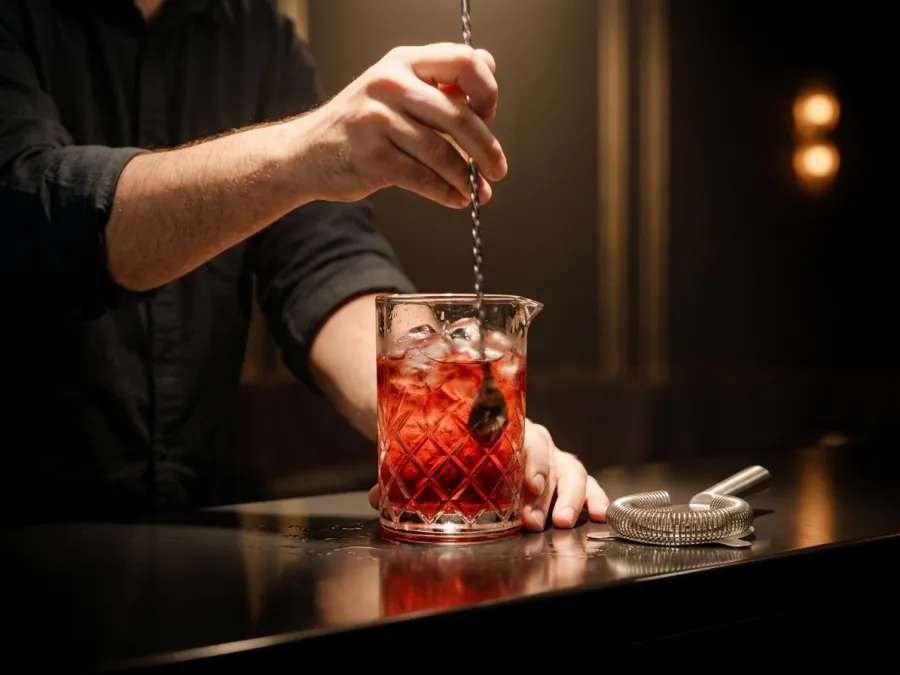
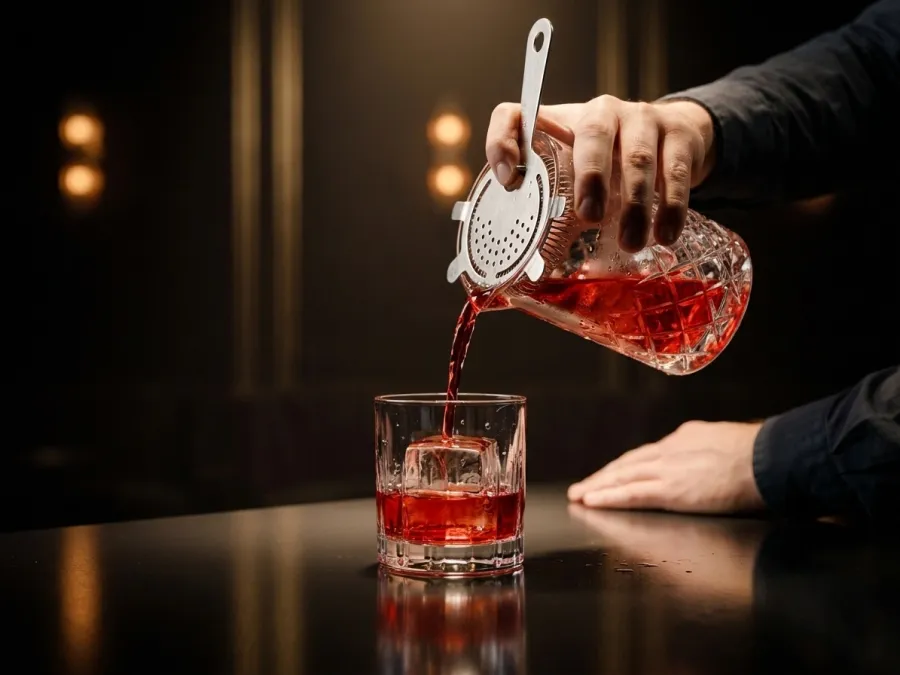
Yes, stir over ice and serve on a large cube.
What glass is a Rosita served in?
A rocks glass. The wide mouth puts the aroma of a citrus twist right under your nose, and the heavy base survives muddling and stirring in the glass.
Is a Rosita shaken or stirred?
Stirred. It contains only spirits and modifiers, so stirring chills and dilutes it while keeping it clear and silky.
How strong is a Rosita?
About 21% ABV after dilution, or roughly 1.5 US standard drinks (21 g of alcohol) per serve.
How many calories are in a Rosita?
Roughly 176 kcal per drink, most of it from alcohol.
Can I make a Rosita without tequila reposado?
Yes. Tequila Blanco is the closest substitute, though the drink will taste different.


