
History of the Perfect Manhattan
- Origin
- New York, USA
- Popular from
- Early 1900s
- Family
- Spirit-forward
- "Perfect" means
- Equal sweet and dry vermouth
The Manhattan appeared in New York in the 1870s or 1880s. In the early 1900s, when dry French vermouth became common in American bars, bartenders started splitting the vermouth between sweet and dry. In bar language, "perfect" means exactly that: equal parts of both.
The Perfect Manhattan is lighter and drier than the classic, with less caramel and more herbal lift.
Sweet, Perfect or Dry
| Style | Vermouth | Garnish |
|---|---|---|
| Classic | Sweet | Cherry |
| Perfect | Half sweet, half dry | Lemon twist |
| Dry | Dry | Lemon twist |
Fun Facts
- The same naming works for any drink: a Perfect Martini or a Perfect Rob Roy.
- A Perfect Rob Roy is also called an Affinity in some books.
- Rye whiskey was the original Manhattan base.
Variations
| Variation | What changes |
|---|---|
| Manhattan | Sweet vermouth only |
| Affinity | Scotch |
| Black Manhattan | Amaro instead of vermouth |
Perfect Manhattan FAQ
What does "perfect" mean in a cocktail?
Equal parts sweet and dry vermouth.
Is a Perfect Manhattan sweeter?
No, it is drier than a classic Manhattan.
Should a Perfect Manhattan be shaken?
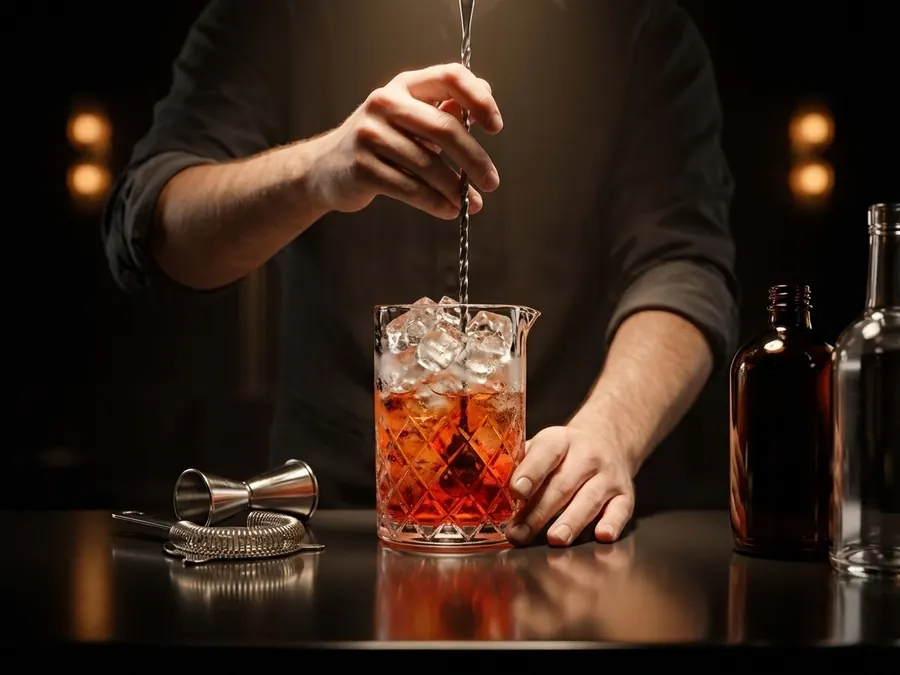
No, stir it so it stays clear and silky.
What glass is a Perfect Manhattan served in?
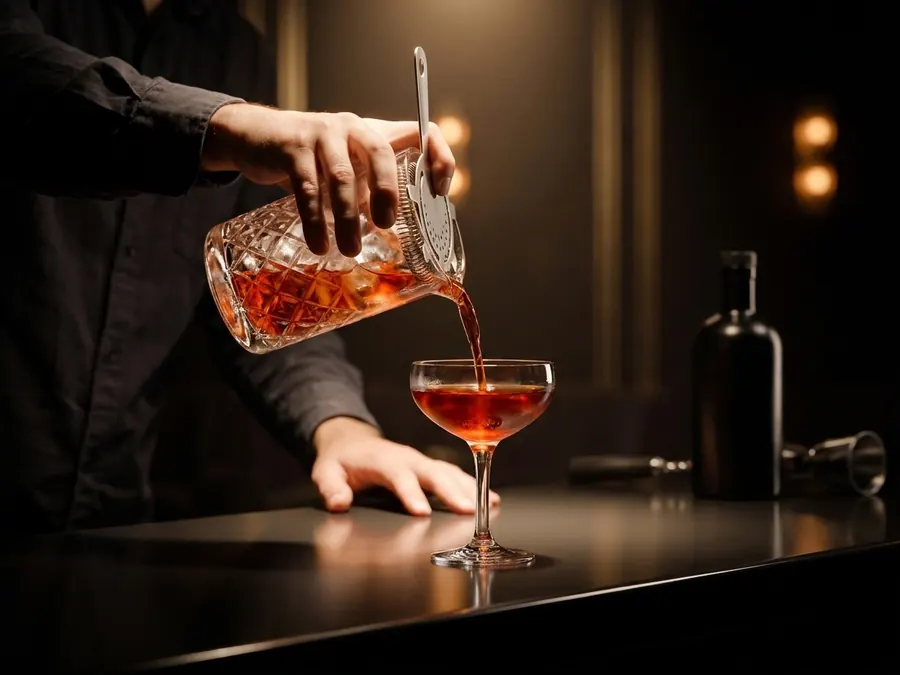
A coupe. The stem keeps your hand away from the cold drink, and the curved rim makes it far harder to spill than a V-shaped martini glass.
Is a Perfect Manhattan shaken or stirred?
Stirred. It contains only spirits and modifiers, so stirring chills and dilutes it while keeping it clear and silky.
How strong is a Perfect Manhattan?
About 25% ABV after dilution, or roughly 1.8 US standard drinks (26 g of alcohol) per serve.
How many calories are in a Perfect Manhattan?
Roughly 192 kcal per drink, most of it from alcohol.
Can I make a Perfect Manhattan without rye whiskey?
Yes. Bourbon is the closest substitute, though the drink will taste different.


