
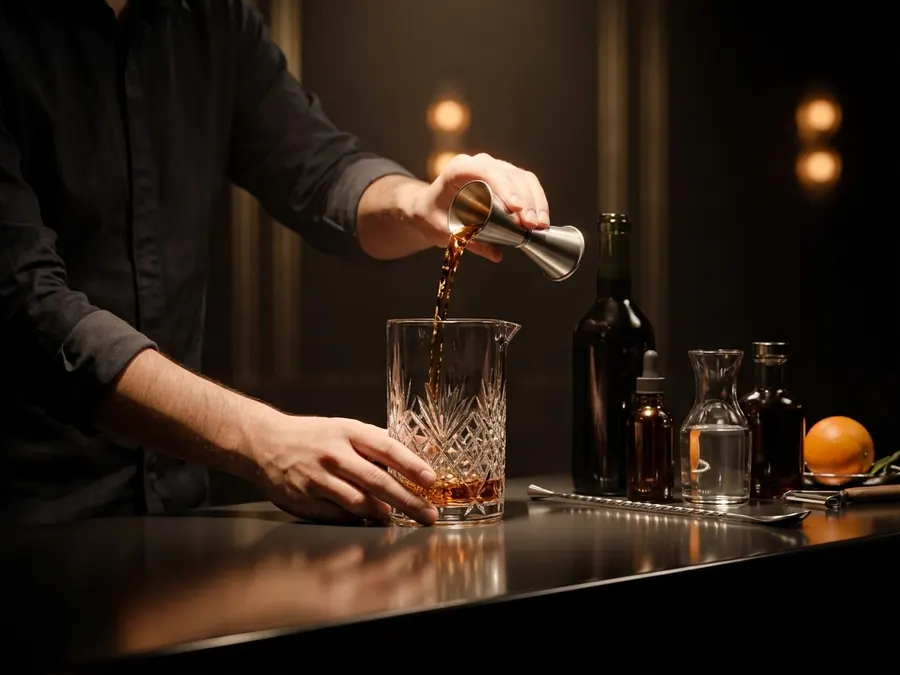
History of the Metropolitan
- Origin
- New York, USA
- Dates from
- 1880s
- Family
- Manhattan
- Base
- Cognac
In the late 19th century brandy was as common behind the American bar as whiskey, and many famous cocktails existed in both forms. The Metropolitan, printed in bar books of the 1880s and 1890s, is a brandy Manhattan with a dash of sugar.
Do not confuse it with the 1990s vodka drink of the same name, a cousin of the Cosmopolitan. The classic Metropolitan is a stirred, spirit-forward drink.
How to Get It Right
- Use a VSOP cognac for a smooth, rounded result.
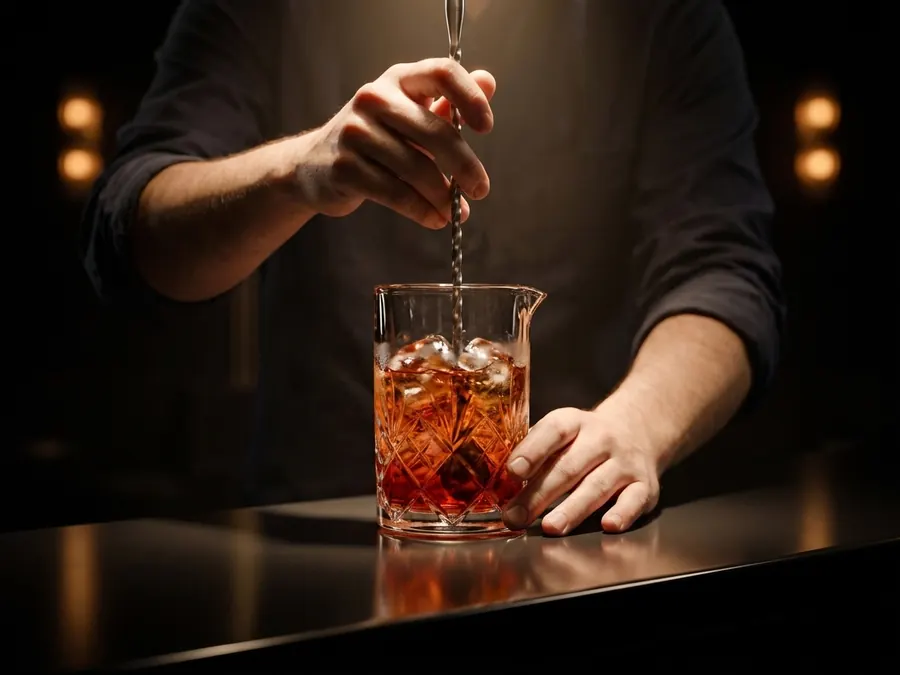
- Stir with plenty of ice for about 30 seconds.
- Express a lemon twist over the top to lift the fruit.
Variations
| Variation | What changes |
|---|---|
| Harvard | Equal parts brandy and vermouth with soda |
| Saratoga | Half brandy, half rye |
| Manhattan | Rye or bourbon instead of brandy |
Metropolitan FAQ
What is in a Metropolitan?
Cognac, sweet vermouth, a little sugar syrup and Angostura bitters.
Is it the same as a Brandy Manhattan?
Almost. The Metropolitan adds a touch of sugar.
Shaken or stirred?
Stirred. It has no juice, so shaking would only cloud it.
What glass is a Metropolitan served in?
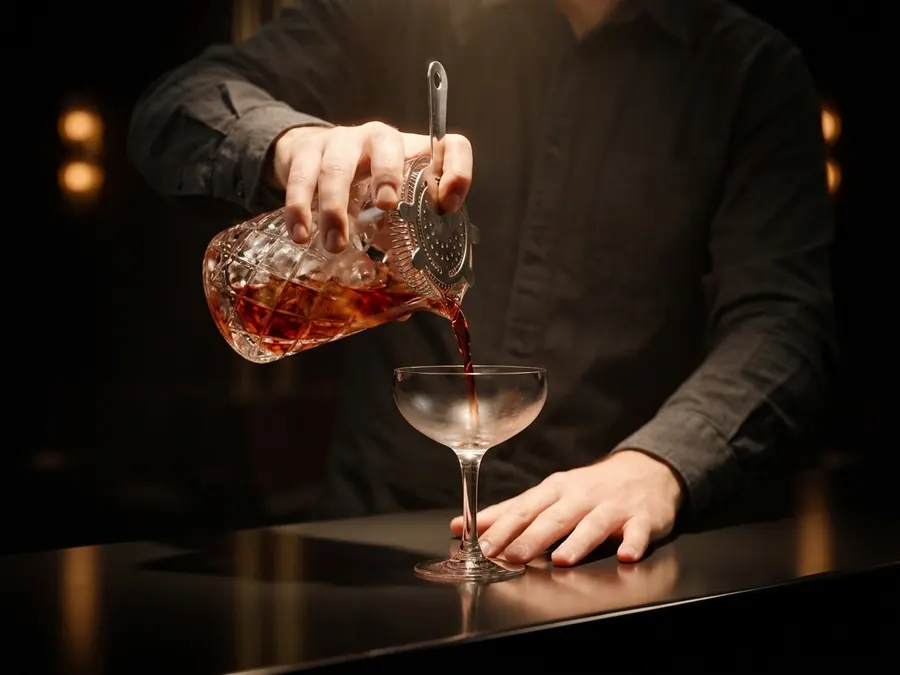
A coupe. The stem keeps your hand away from the cold drink, and the curved rim makes it far harder to spill than a V-shaped martini glass.
Is a Metropolitan shaken or stirred?
Stirred. It contains only spirits and modifiers, so stirring chills and dilutes it while keeping it clear and silky.
How strong is a Metropolitan?
About 22% ABV after dilution, or roughly 1.7 US standard drinks (23 g of alcohol) per serve.
How many calories are in a Metropolitan?
Roughly 193 kcal per drink, most of it from alcohol.
Can I make a Metropolitan without cognac?
Yes. Bourbon is the closest substitute, though the drink will taste different.


