
History of the Cranberry Mimosa
- Origin
- United States
- Family
- Mimosa
- Key ingredients
- Cranberry juice, Champagne
- Season
- Thanksgiving and Christmas
The Mimosa was born in 1920s Paris with orange juice and Champagne. The Cranberry Mimosa swaps in tart cranberry juice for a festive red colour, and it has become a fixture of holiday brunch tables in America.
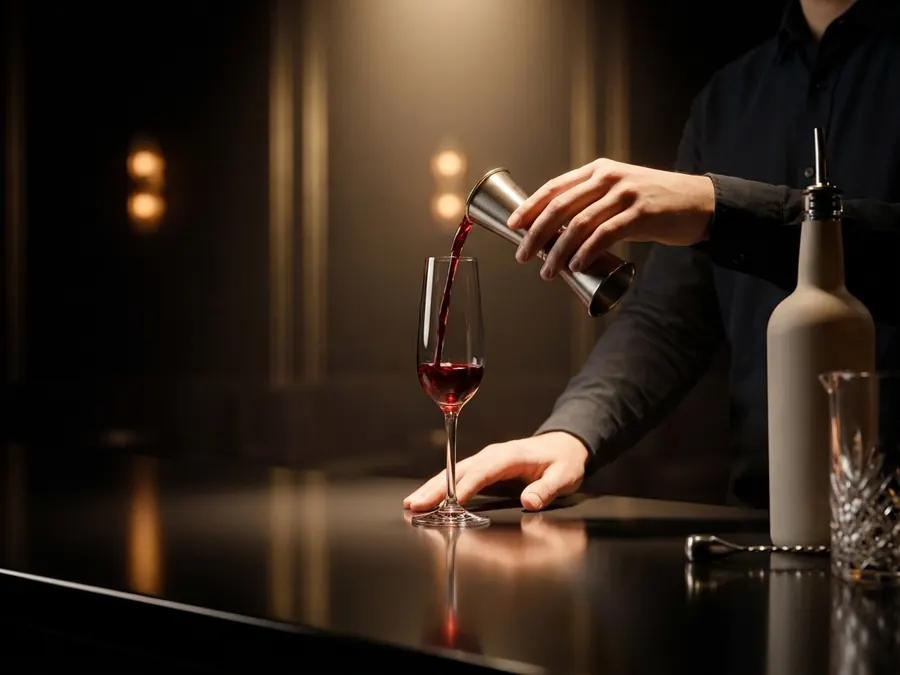
A dash of orange liqueur keeps a link to the original and softens the tartness of the cranberry.
How to Get It Right
- Chill the juice and the Champagne well.
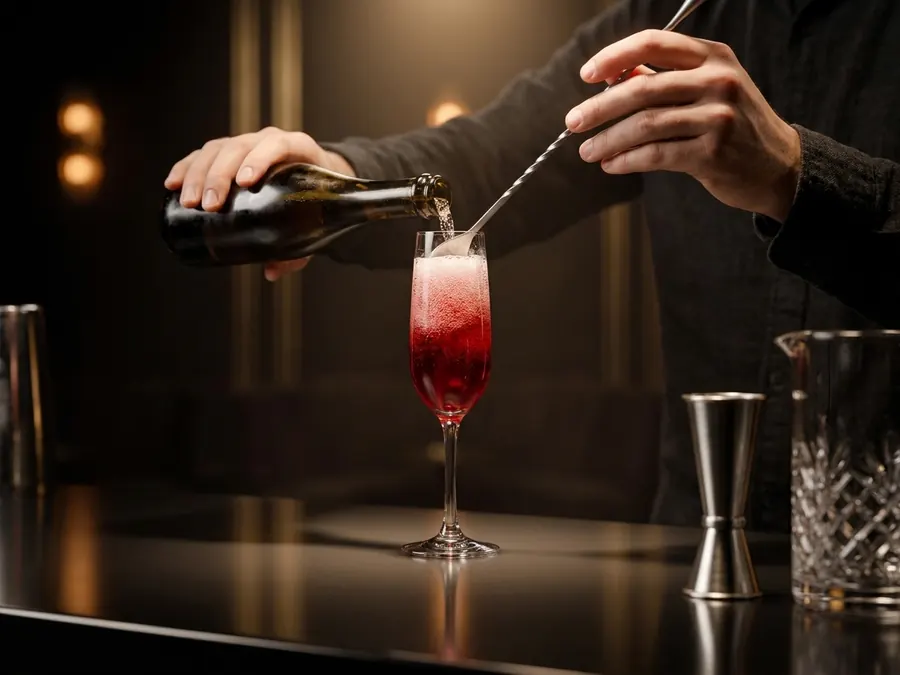
- Pour the Champagne first and add the juice slowly, so it does not foam over.
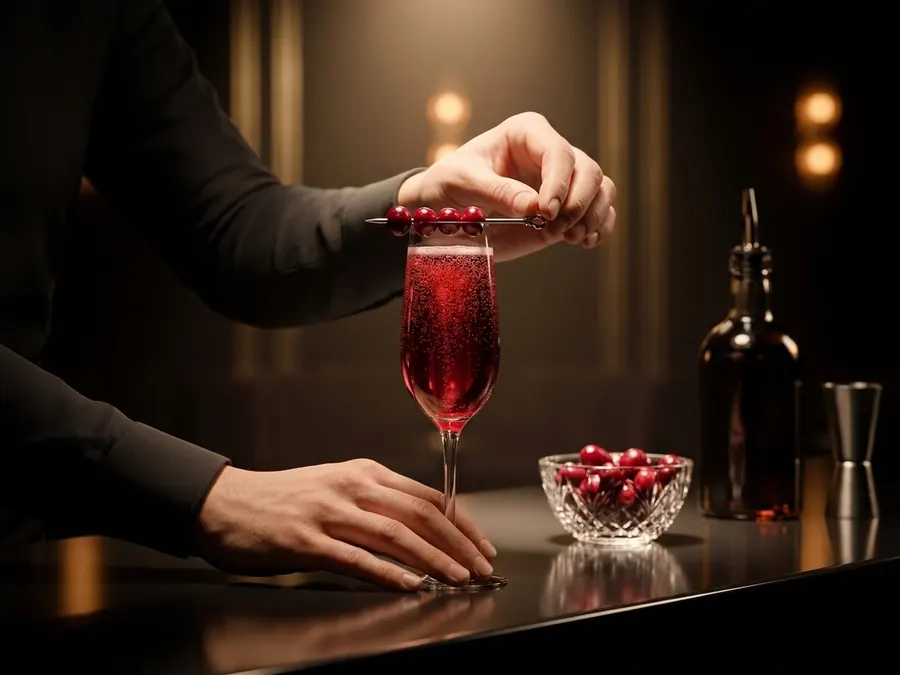
- Float a few fresh cranberries on top.
Variations
| Variation | What changes |
|---|---|
| Mimosa | Orange juice instead of cranberry |
| Poinsettia | Cranberry, orange liqueur and Champagne, served in a coupe |
| Prosecco | Prosecco instead of Champagne for a fruitier version |
Cranberry Mimosa FAQ
What is in a Cranberry Mimosa?
Cranberry juice, a dash of orange liqueur and Champagne or sparkling wine.
Can I make it for a crowd?
Yes. Set out chilled bottles and juice and let guests pour their own.
Is there a difference between a Cranberry Mimosa and a Poinsettia?
They are very similar. A Poinsettia usually uses more orange liqueur and is often served in a coupe.
What glass is a Cranberry Mimosa served in?
A champagne flute. A narrow surface keeps bubbles in the wine longer, and the column shows off the stream of fine bubbles.
Is a Cranberry Mimosa shaken or stirred?
Neither. It is built directly in the glass and given a gentle stir.
How strong is a Cranberry Mimosa?
About 9% ABV, or roughly 0.8 US standard drinks (12 g of alcohol) per serve.
How many calories are in a Cranberry Mimosa?
Roughly 130 kcal per drink, most of it from alcohol.


