
History of the Saratoga
- Origin
- United States
- First printed
- 1887
- Family
- Manhattan
- Base
- Brandy and rye
The Saratoga is named after Saratoga Springs, the fashionable spa and horse-racing town in upstate New York. It appears in the 1887 edition of Jerry Thomas's bartender's guide.
Splitting the base between cognac and rye gives it the softness of brandy and the spice of rye. That idea later shaped the Vieux Carré in New Orleans.
How to Get It Right
- Use a spicy, high-rye whiskey to balance the brandy.
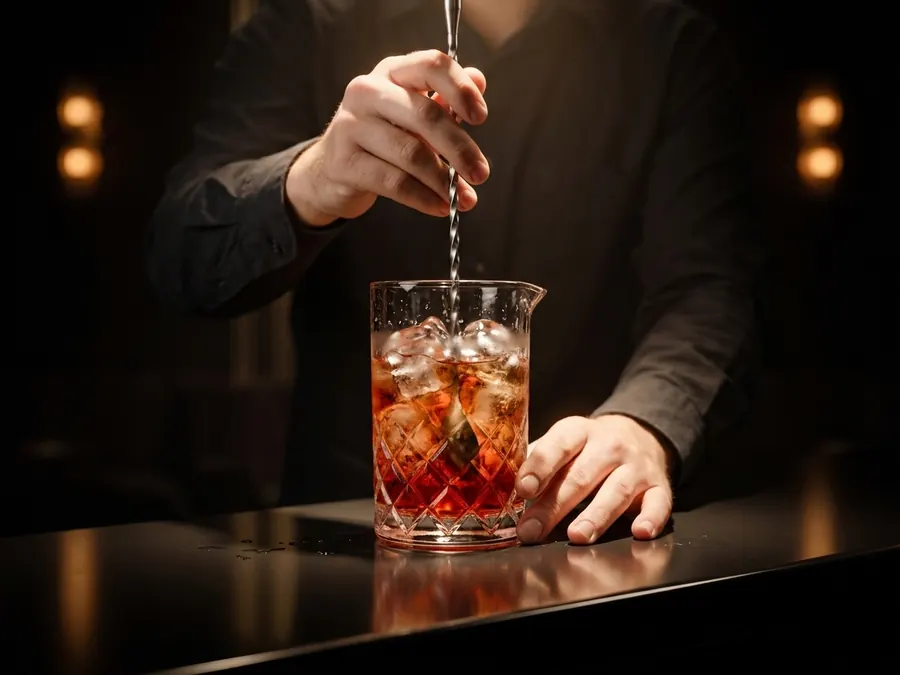
- Stir longer than usual: equal parts with vermouth needs dilution.
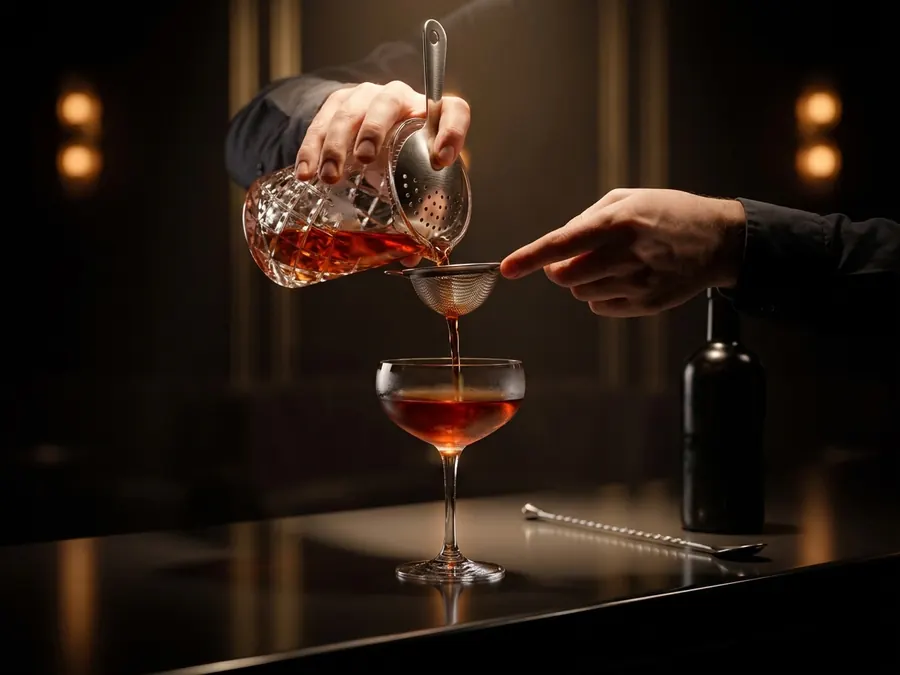
- Serve in a chilled coupe with a lemon twist.
Variations
| Variation | What changes |
|---|---|
| Vieux Carré | Adds Bénédictine and Peychaud's |
| Metropolitan | All brandy |
| Manhattan | All whiskey |
Saratoga FAQ
What is in a Saratoga cocktail?
Brandy, rye whiskey and sweet vermouth in equal parts, with Angostura.
Is it like a Manhattan?
Yes, a Manhattan with half the whiskey swapped for brandy.
What glass do I use?
A chilled coupe or cocktail glass.
What glass is a Saratoga served in?
A coupe. The stem keeps your hand away from the cold drink, and the curved rim makes it far harder to spill than a V-shaped martini glass.
Is a Saratoga shaken or stirred?
Stirred. It contains only spirits and modifiers, so stirring chills and dilutes it while keeping it clear and silky.
How strong is a Saratoga?
About 24% ABV after dilution, or roughly 1.7 US standard drinks (24 g of alcohol) per serve.
How many calories are in a Saratoga?
Roughly 189 kcal per drink, most of it from alcohol.
Can I make a Saratoga without cognac?
Yes. Bourbon is the closest substitute, though the drink will taste different.


