
History of the Champs-Élysées
- Origin
- Paris
- Created
- 1920s
- First printed
- Savoy Cocktail Book, 1930
- Family
- Sour
Named after Paris's grand avenue, the Champs-Élysées is a cognac sour enriched with green Chartreuse and bitters. It appeared in the Savoy Cocktail Book in 1930. It's essentially a herbal Sidecar, and a favourite of bartenders who love Chartreuse.
Fun Facts
- Both cognac and Chartreuse are French.
- Yellow Chartreuse makes a softer version.
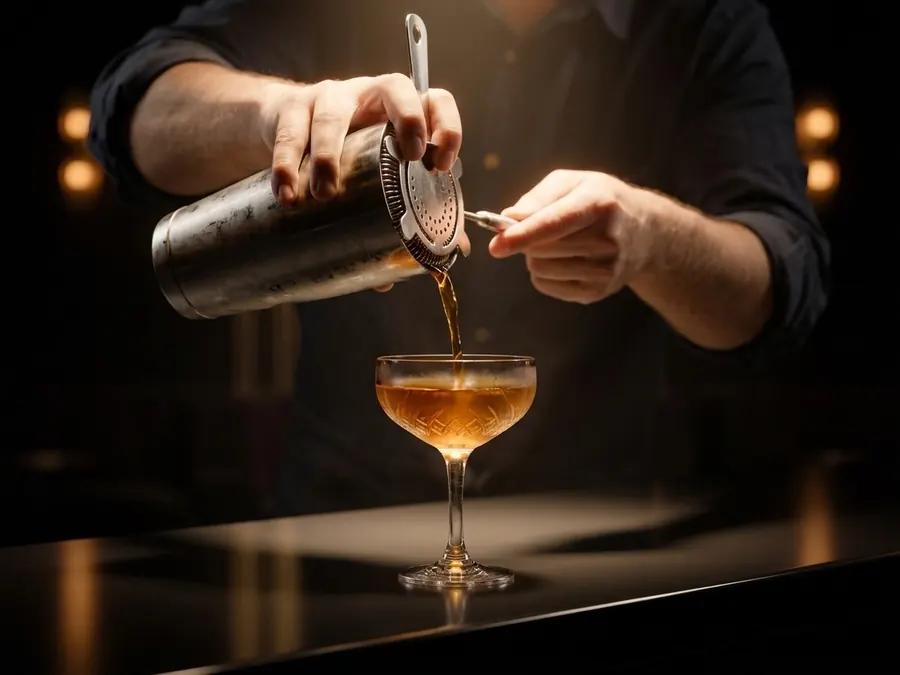
- It's served up in a coupe.
Variations
| Variation | What changes |
|---|---|
| Sidecar | Orange liqueur instead of Chartreuse |
| Brandy Crusta | Maraschino and sugar rim |
Champs-Élysées FAQ
What is in a Champs-Élysées?
Cognac, green Chartreuse, lemon, sugar and bitters.
Is it strong?
Moderately; both cognac and Chartreuse are strong.
Is it like a Sidecar?
Yes, a herbal variation.
What glass is a Champs-Élysées served in?
A coupe. The stem keeps your hand away from the cold drink, and the curved rim makes it far harder to spill than a V-shaped martini glass.
Is a Champs-Élysées shaken or stirred?
Shaken. It contains citrus, juice, cream or egg, which need the force and aeration of shaking.
How strong is a Champs-Élysées?
About 18% ABV after dilution, or roughly 1.5 US standard drinks (21 g of alcohol) per serve.
How many calories are in a Champs-Élysées?
Roughly 191 kcal per drink, most of it from alcohol.
Can I make a Champs-Élysées without cognac?
Yes. Bourbon is the closest substitute, though the drink will taste different.


