
History of the Lucien Gaudin
- Origin
- Paris, France
- Dates from
- 1920s
- Family
- Negroni relative
- Named after
- A French Olympic fencer
Lucien Gaudin was a French fencer and a sporting star of the 1920s, who won two Olympic gold medals in Amsterdam in 1928. The cocktail named after him comes from Paris in the same era.
With Campari, orange liqueur and dry vermouth it sits close to the Negroni, but it is lighter, drier and more citrusy.
How to Get It Right
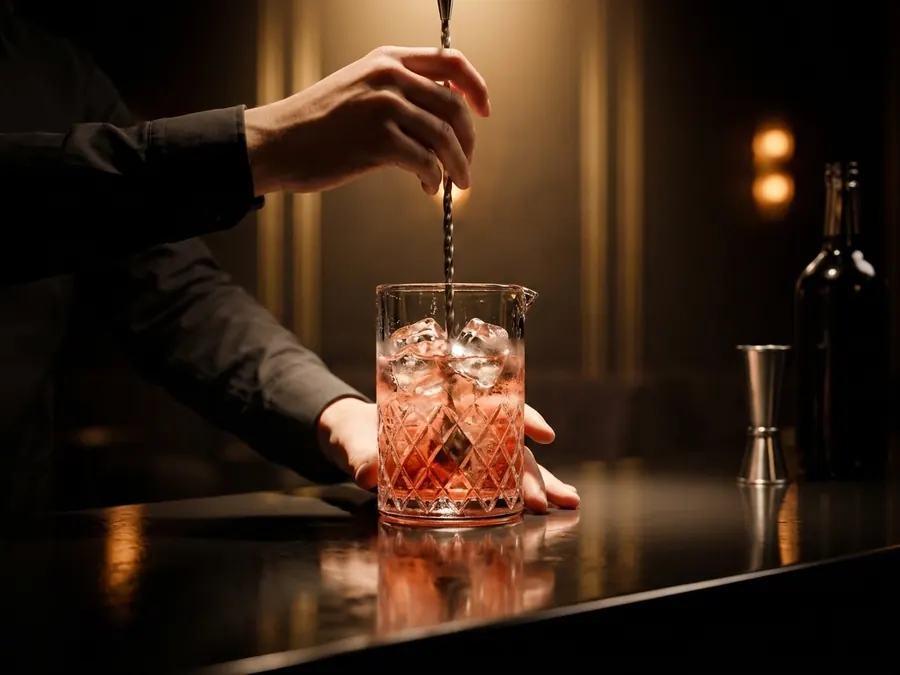
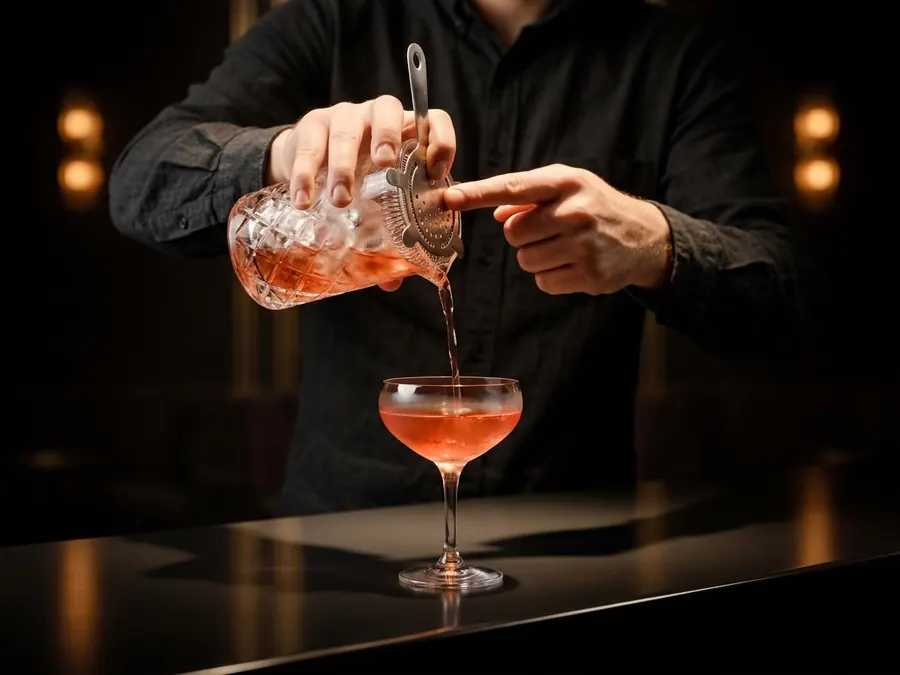
- Stir very cold and strain into a chilled coupe.
- Use a fresh dry vermouth from the fridge.
- Express an orange twist over the top.
Variations
| Variation | What changes |
|---|---|
| Negroni | Sweet vermouth, no orange liqueur |
| Cardinale | Gin, Campari and dry vermouth |
| Old Pal | Rye instead of gin |
Lucien Gaudin FAQ
Who was Lucien Gaudin?
A French fencer who won Olympic gold in foil and épée in 1928.
What does it taste like?
Bittersweet and dry, with bright orange notes.
Is it stronger than a Negroni?
About the same. It just tastes lighter.
What glass is a Lucien Gaudin served in?
A coupe. The stem keeps your hand away from the cold drink, and the curved rim makes it far harder to spill than a V-shaped martini glass.
Is a Lucien Gaudin shaken or stirred?
Stirred. It contains only spirits and modifiers, so stirring chills and dilutes it while keeping it clear and silky.
How strong is a Lucien Gaudin?
About 23% ABV after dilution, or roughly 1.4 US standard drinks (19 g of alcohol) per serve.
How many calories are in a Lucien Gaudin?
Roughly 167 kcal per drink, most of it from alcohol.
Can I make a Lucien Gaudin without London dry gin?
Yes. Vodka is the closest substitute, though the drink will taste different.


