
History of the Chrysanthemum
- Origin
- New York / London
- First printed
- 1916
- Family
- Vermouth cocktail
- Strength
- Low alcohol
The Chrysanthemum appears in Hugo Ensslin's 1916 Recipes for Mixed Drinks and later in Harry Craddock's 1930 Savoy Cocktail Book. It turns the usual Martini ratio upside down: dry vermouth is the base and the strong ingredients are only accents.
Bénédictine adds honey and herbs, and a few drops of absinthe give it lift. The result is an elegant, low-alcohol aperitif.
How to Get It Right
- Use fresh vermouth. Opened vermouth goes stale within weeks.
- Measure the absinthe in drops or dashes.
- Serve very cold in a small coupe with an orange twist.
Variations
| Variation | What changes |
|---|---|
| Bamboo | Sherry and vermouth |
| Adonis | Sherry and sweet vermouth |
| Queen Elizabeth | Gin added, no absinthe |
Chrysanthemum FAQ
Is the Chrysanthemum low in alcohol?
Yes. With vermouth as the base it is about as strong as a glass of wine.
What does Bénédictine add?
Honey, saffron and herbal sweetness.
When should I drink it?
Before dinner, as an aperitif.
What glass is a Chrysanthemum served in?
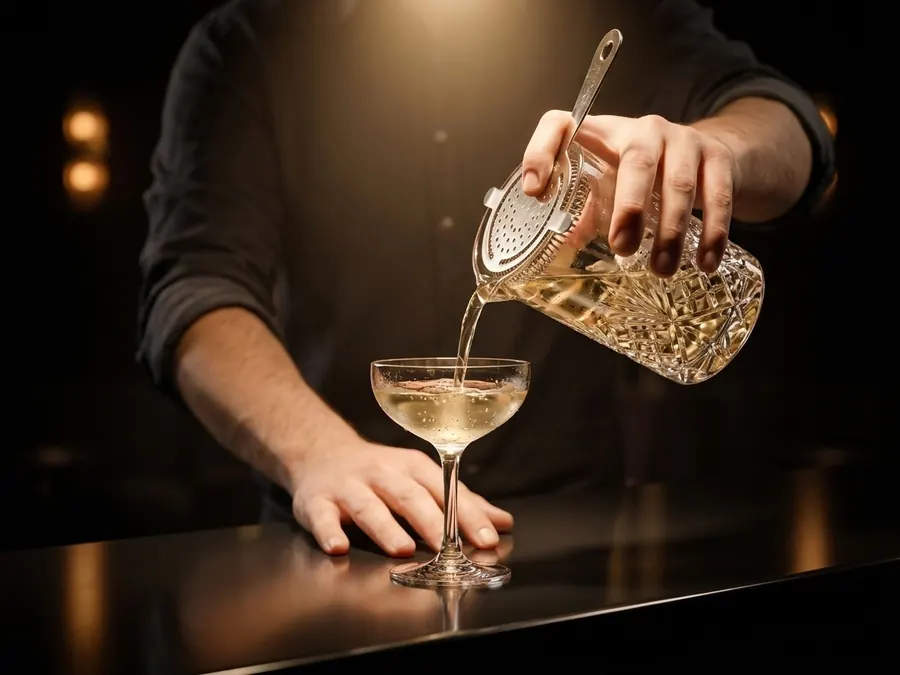
A coupe. The stem keeps your hand away from the cold drink, and the curved rim makes it far harder to spill than a V-shaped martini glass.
Is a Chrysanthemum shaken or stirred?
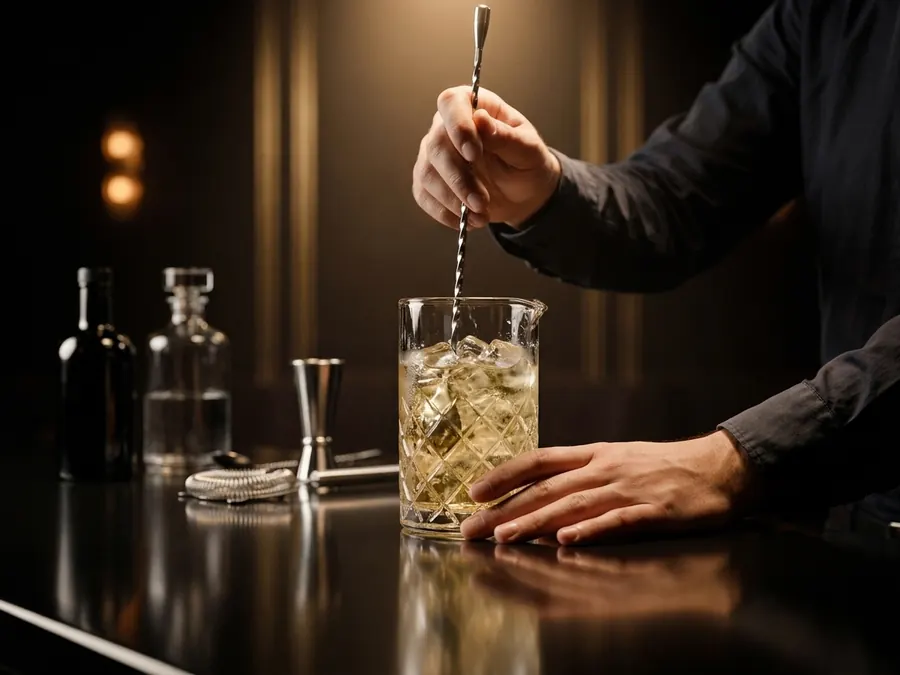
Stirred. It contains only spirits and modifiers, so stirring chills and dilutes it while keeping it clear and silky.
How strong is a Chrysanthemum?
About 17% ABV after dilution, or roughly 1 US standard drink (14 g of alcohol) per serve.
How many calories are in a Chrysanthemum?
Roughly 129 kcal per drink, most of it from alcohol.


