
History of the Jasmine
- Origin
- United States
- Created
- Early 1990s
- Created by
- Paul Harrington
- Named after
- His friend Matt Jasmin
- Family
- Sour
Paul Harrington, a bartender and writer whose online cocktail column helped spark the cocktail revival, created the Jasmine for a friend. It combines gin with small amounts of Campari and orange liqueur and fresh lemon. The result tastes uncannily like pink grapefruit juice, even though there's none in it.
Fun Facts
- Harrington's column in Wired magazine was one of the first cocktail columns online.
- It's a great introduction to Campari.
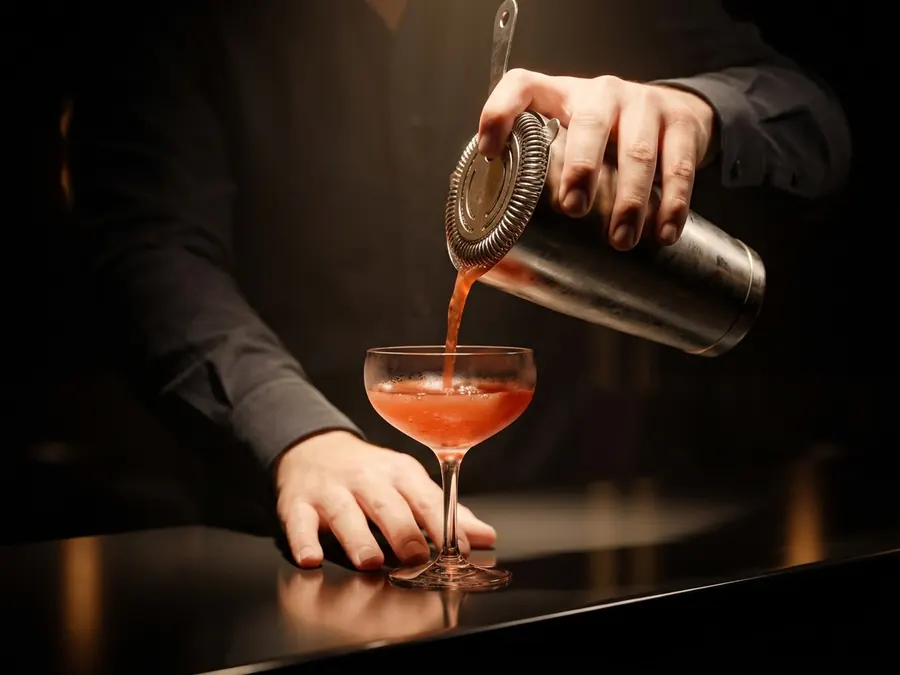
- The Jasmine is served up in a coupe.
Variations
| Variation | What changes |
|---|---|
| White Lady | No Campari |
| Jasmine Royale | Topped with sparkling wine |
Jasmine FAQ
What is in a Jasmine?
Gin, Campari, orange liqueur and lemon juice.
Does it contain grapefruit?
No, but it tastes like it.
Who created the Jasmine?
Paul Harrington, in the early 1990s.
What glass is a Jasmine served in?
A coupe. The stem keeps your hand away from the cold drink, and the curved rim makes it far harder to spill than a V-shaped martini glass.
Is a Jasmine shaken or stirred?
Shaken. It contains citrus, juice, cream or egg, which need the force and aeration of shaking.
How strong is a Jasmine?
About 18% ABV after dilution, or roughly 1.3 US standard drinks (18 g of alcohol) per serve.
How many calories are in a Jasmine?
Roughly 146 kcal per drink, most of it from alcohol.
Can I make a Jasmine without London dry gin?
Yes. Vodka is the closest substitute, though the drink will taste different.


