
History of the 50/50 Martini
- Origin
- United States
- Created
- Early Martini era, around 1900
- Revived
- 2000s, notably by Audrey Saunders at Pegu Club
- Family
- Stirred, aromatic
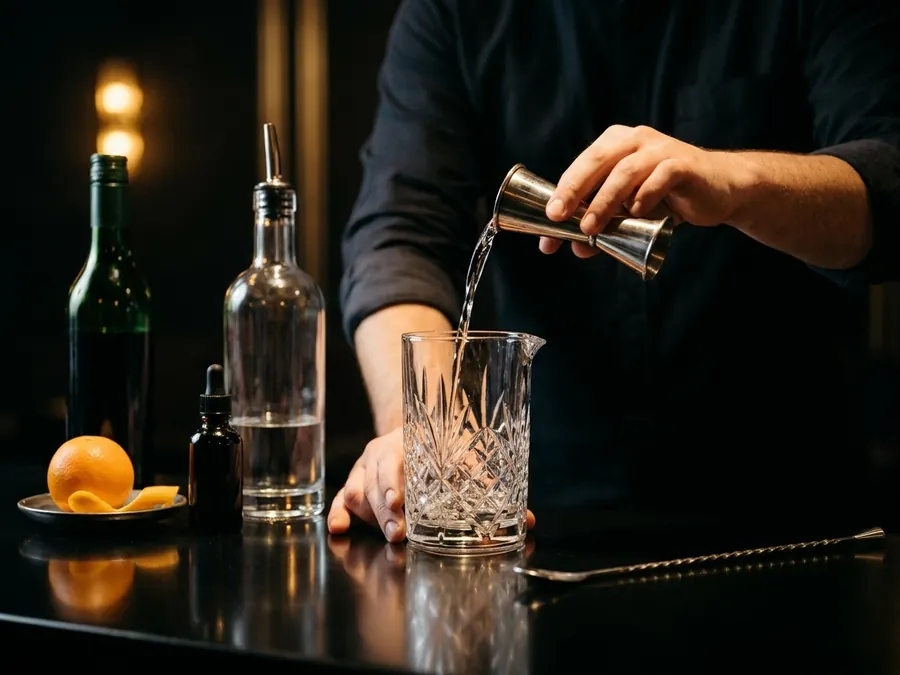
Many early Martinis used as much vermouth as gin, or more. As the 20th century went on, Martinis became drier and drier until vermouth was barely present. The 50/50 Martini goes back to the beginning: equal parts gin and dry vermouth, with a dash of orange bitters. It's softer, more aromatic and lower in alcohol than a modern Martini.
Audrey Saunders served a famous version at Pegu Club, and the 50/50 is now a favourite of bartenders who love vermouth.
Fun Facts
- It contains roughly a third less alcohol than a classic dry Martini.
- Fresh vermouth is essential.
- A Reverse Martini uses even more vermouth than gin.
Variations
| Variation | What changes |
|---|---|
| Reverse Martini | 2 parts vermouth to 1 part gin |
| Dry Martini | Much less vermouth |
50/50 Martini FAQ
What is a 50/50 Martini?
A Martini with equal parts gin and dry vermouth.
Is it weaker than a regular Martini?
Yes, because vermouth is about 18% ABV.
What vermouth should I use?
A fresh, quality dry vermouth kept in the fridge.
What glass is a 50/50 Martini served in?
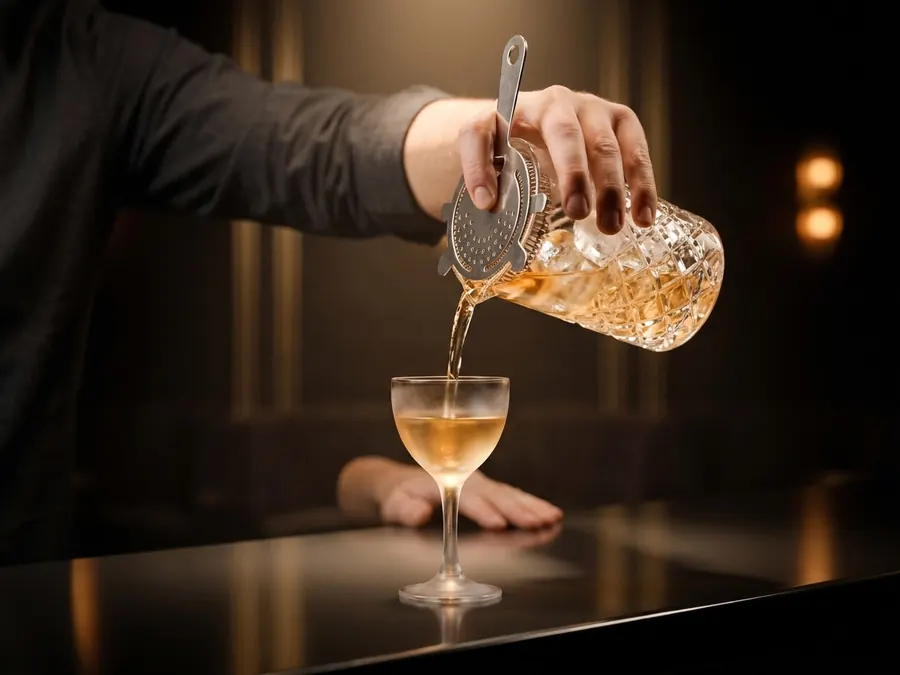
A nick & nora glass. The tall bowl and slightly closed rim hold aroma and make an honest pour look generous.
Is a 50/50 Martini shaken or stirred?
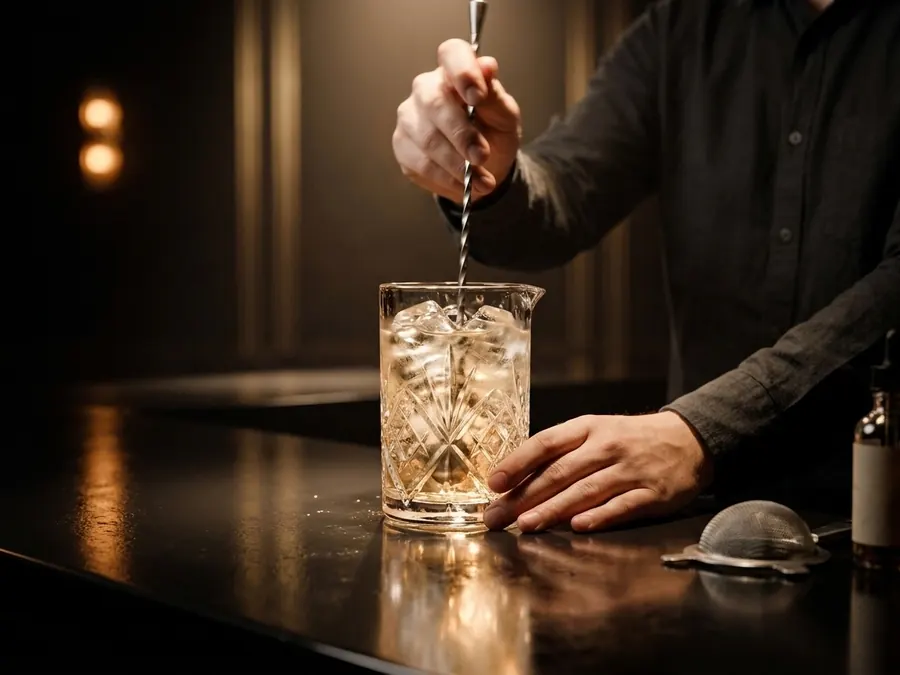
Stirred. It contains only spirits and modifiers, so stirring chills and dilutes it while keeping it clear and silky.
How strong is a 50/50 Martini?
About 21% ABV after dilution, or roughly 1.3 US standard drinks (18 g of alcohol) per serve.
How many calories are in a 50/50 Martini?
Roughly 135 kcal per drink, most of it from alcohol.
Can I make a 50/50 Martini without London dry gin?
Yes. Vodka is the closest substitute, though the drink will taste different.


