
History of the Algonquin
- Origin
- New York, USA
- Named after
- Algonquin Hotel (opened 1902)
- Family
- Whiskey sour-style
- Base
- Rye whiskey
The Algonquin takes its name from New York's Algonquin Hotel on West 44th Street. From 1919 the hotel hosted the Algonquin Round Table, a lunch group of writers and wits including Dorothy Parker and Robert Benchley. The drink's exact origin isn't documented, and the hotel itself was dry during Prohibition, but the name honours that literary crowd.
The mix of rye, dry vermouth and pineapple juice is unusual: dry, slightly fruity and lightly foamy.
Fun Facts
- The Algonquin Hotel is known for its resident cats.
- Pineapple juice creates a fine foam when shaken hard.
- It is one of very few classics that pairs whiskey with pineapple.
Variations
| Variation | What changes |
|---|---|
| Bourbon Algonquin | Bourbon instead of rye |
| Manhattan | Sweet vermouth, no juice |
| Scofflaw | Lemon and grenadine |
Algonquin FAQ
What is in an Algonquin cocktail?
Rye whiskey, dry vermouth and pineapple juice.
Who invented the Algonquin?
Nobody knows; it is named after the hotel.
Should it be shaken or stirred?
Shaken, because it contains juice.
What glass is an Algonquin served in?
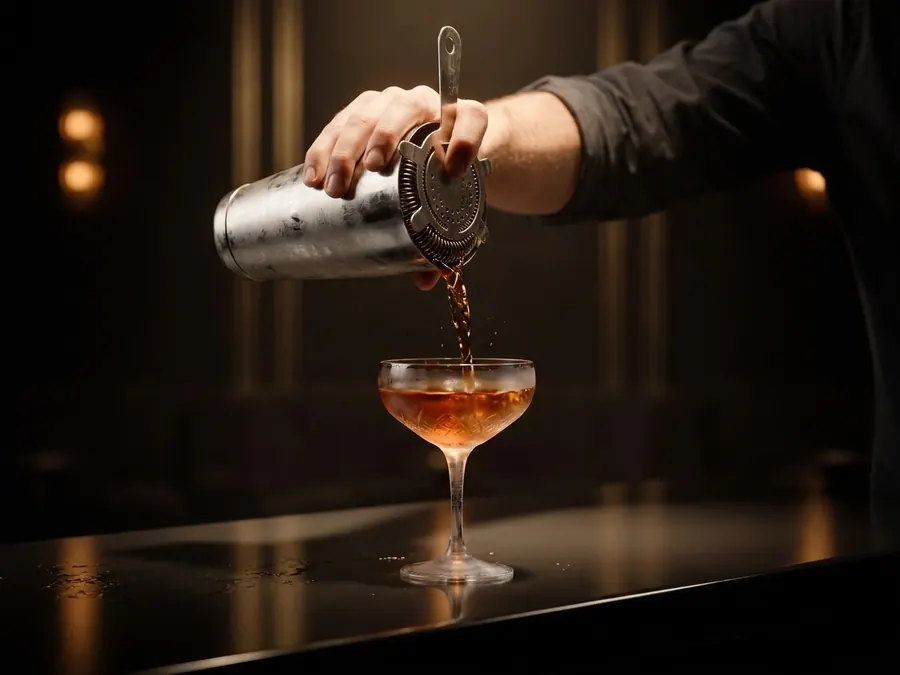
A coupe. The stem keeps your hand away from the cold drink, and the curved rim makes it far harder to spill than a V-shaped martini glass.
Is an Algonquin shaken or stirred?
Shaken. It contains citrus, juice, cream or egg, which need the force and aeration of shaking.
How strong is an Algonquin?
About 17% ABV after dilution, or roughly 1.4 US standard drinks (19 g of alcohol) per serve.
How many calories are in an Algonquin?
Roughly 150 kcal per drink, most of it from alcohol.
Can I make an Algonquin without rye whiskey?
Yes. Bourbon is the closest substitute, though the drink will taste different.


