
History of the Tipperary
- Origin
- New York, USA
- First printed
- 1916
- Creator
- Hugo Ensslin (recorded)
- Family
- Spirit-forward
The Tipperary appears in Hugo Ensslin's Recipes for Mixed Drinks (1916), with equal parts Irish whiskey, green Chartreuse and sweet vermouth. Its name likely nods to "It's a Long Way to Tipperary", the music-hall song that became a First World War marching tune.
Equal parts makes a very herbal drink. Modern bartenders usually cut the Chartreuse back and add bitters, which lets the whiskey lead.
Fun Facts
- It is essentially a Bijou with Irish whiskey instead of gin.
- Ensslin's book was the last major American cocktail book before Prohibition.
- Green Chartreuse is 55% ABV, so small changes matter.
Variations
Tipperary FAQ
What is in a Tipperary cocktail?
Irish whiskey, sweet vermouth and green Chartreuse.
Why is it called the Tipperary?
Probably after the song "It's a Long Way to Tipperary".
Is a Tipperary sweet?
It is rich and herbal, with sweetness from vermouth and Chartreuse.
What glass is a Tipperary served in?
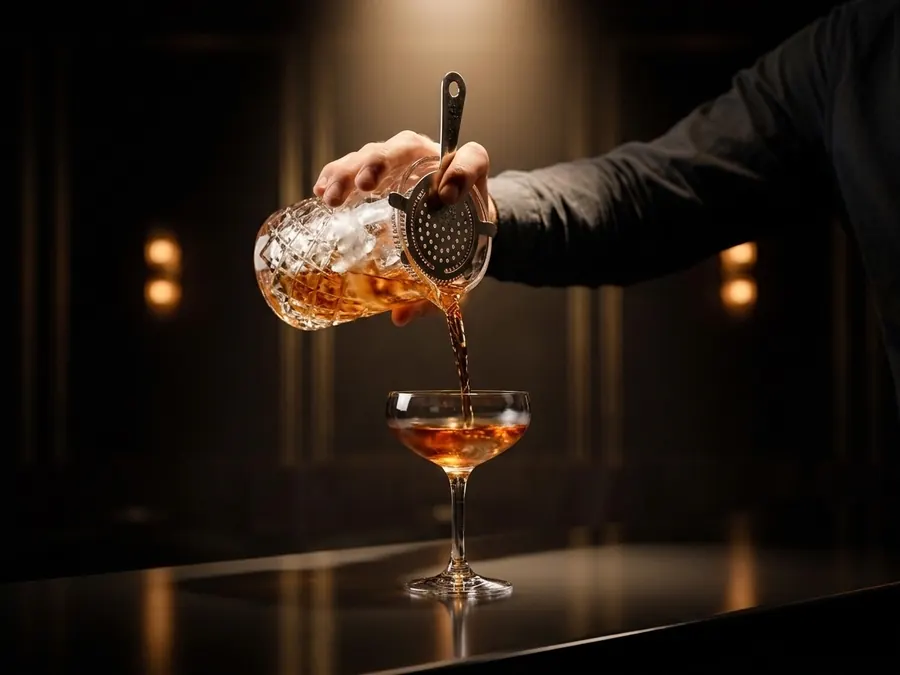
A coupe. The stem keeps your hand away from the cold drink, and the curved rim makes it far harder to spill than a V-shaped martini glass.
Is a Tipperary shaken or stirred?
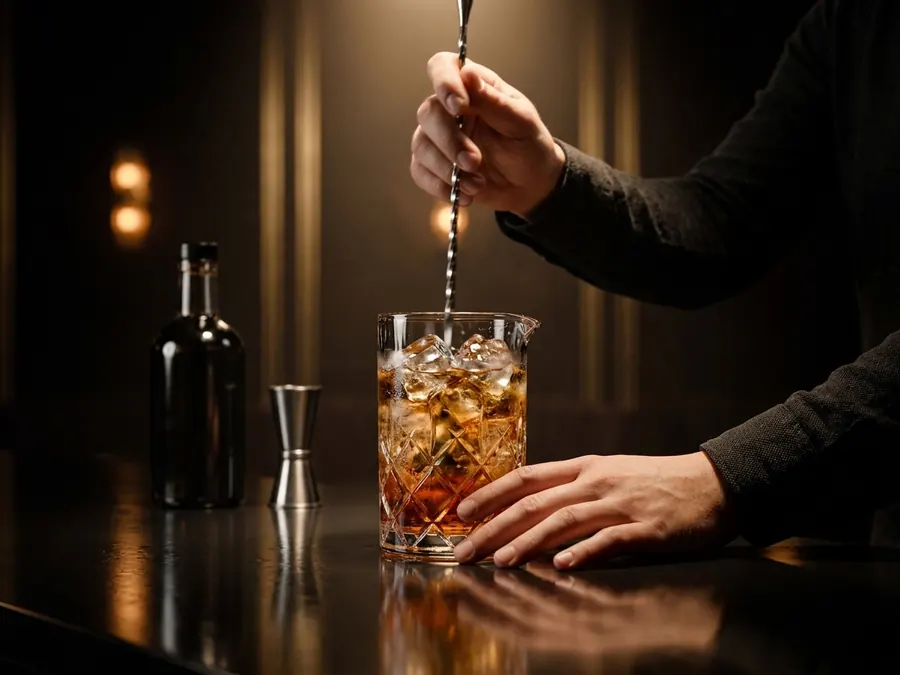
Stirred. It contains only spirits and modifiers, so stirring chills and dilutes it while keeping it clear and silky.
How strong is a Tipperary?
About 25% ABV after dilution, or roughly 1.7 US standard drinks (24 g of alcohol) per serve.
How many calories are in a Tipperary?
Roughly 197 kcal per drink, most of it from alcohol.
Can I make a Tipperary without Irish whiskey?
Yes. Blended Scotch is the closest substitute, though the drink will taste different.


