
History of the East India Cocktail
- Origin
- United States
- First printed
- 1882
- Family
- Improved brandy cocktail
- Base
- Cognac
The East India Cocktail appears in Harry Johnson's 1882 Bartender's Manual, where he notes it was a favourite of the English living in India. It is an improved brandy cocktail: spirit and bitters sweetened with liqueurs instead of plain sugar.
Orange curaçao, a little pineapple and maraschino give it a fruity, exotic note that matched its name.
How to Get It Right
- Pineapple syrup is the traditional choice. If you use juice, keep the measure small.
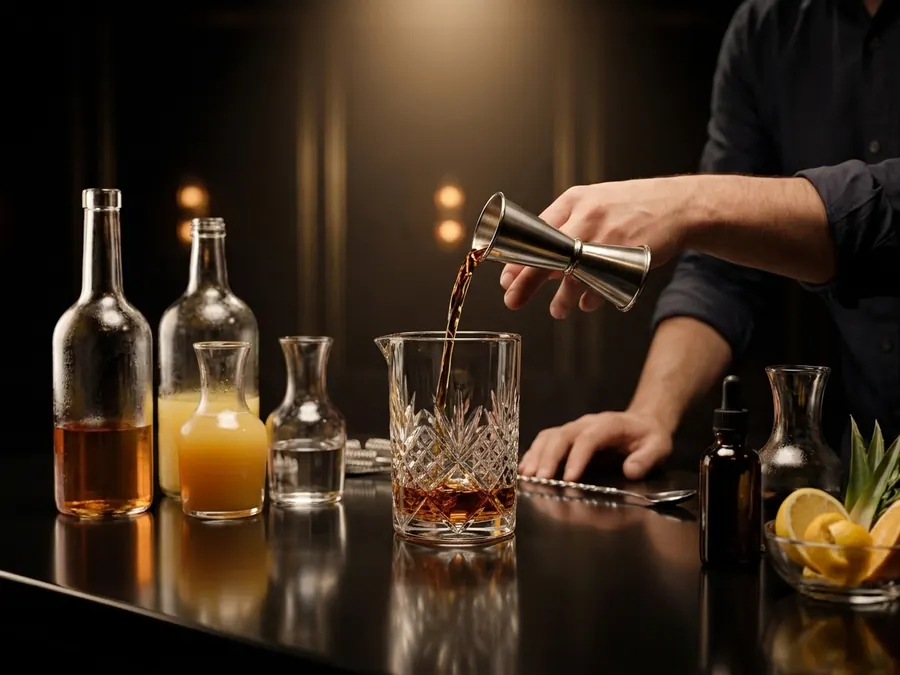
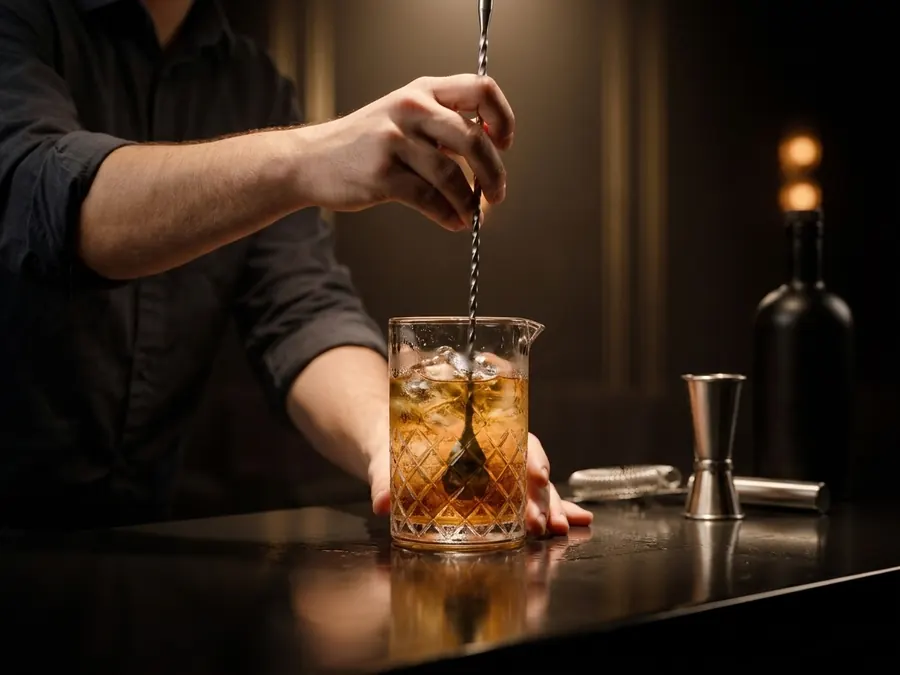
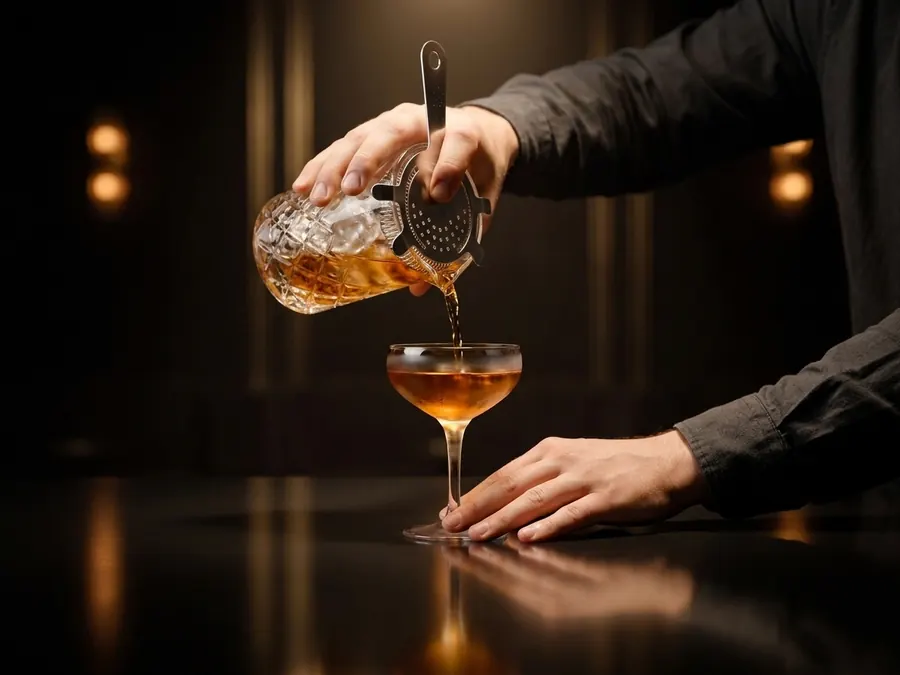
- Stir it well with ice and strain into a chilled coupe.
- Express a lemon twist over the top.
Variations
| Variation | What changes |
|---|---|
| Brandy Crusta | Adds lemon juice and a sugar rim |
| Improved Whiskey Cocktail | Whiskey with maraschino and absinthe |
| Metropolitan | Sweet vermouth instead of liqueurs |
East India Cocktail FAQ
Why is it called the East India Cocktail?
Harry Johnson said it was popular with the English in India, then often called the East Indies.
What is in it?
Cognac, orange curaçao, pineapple, maraschino and Angostura.
Is it sweet?
Only lightly. The liqueurs round off the brandy without making it sugary.
What glass is an East India Cocktail served in?
A coupe. The stem keeps your hand away from the cold drink, and the curved rim makes it far harder to spill than a V-shaped martini glass.
Is an East India Cocktail shaken or stirred?
Stirred, which chills and dilutes it while keeping the texture silky.
How strong is an East India Cocktail?
About 25% ABV after dilution, or roughly 1.7 US standard drinks (23 g of alcohol) per serve.
How many calories are in an East India Cocktail?
Roughly 179 kcal per drink, most of it from alcohol.
Can I make an East India Cocktail without cognac?
Yes. Bourbon is the closest substitute, though the drink will taste different.


