
History of the Bamboo
- Origin
- Grand Hotel, Yokohama, Japan
- Created
- 1890s
- Popularised by
- Louis Eppinger
- Family
- Stirred, low alcohol
Louis Eppinger, a German-born bartender, ran the bar at the Grand Hotel in Yokohama in the 1890s, serving foreign visitors to Japan. His Bamboo, equal parts dry sherry and dry vermouth with bitters, became famous among travellers and spread around the world. It's elegant, savoury and low in alcohol.
Fun Facts
- It's one of the earliest cocktails associated with Japan.
- It has roughly half the alcohol of a Martini.
- Fresh sherry and vermouth are essential.
Variations
| Variation | What changes |
|---|---|
| Adonis | Sweet vermouth |
| 50/50 Martini | Gin instead of sherry |
Bamboo FAQ
What is in a Bamboo?
Dry sherry, dry vermouth and bitters.
Where was it created?
At the Grand Hotel in Yokohama, Japan.
Is it strong?
No, it's a low-alcohol aperitif.
What glass is a Bamboo served in?
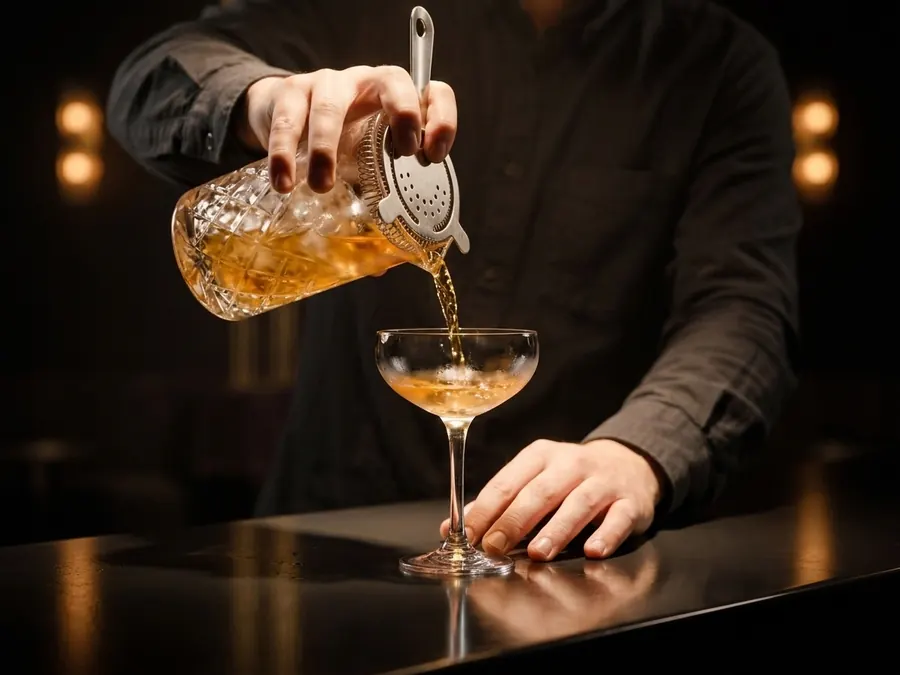
A coupe. The stem keeps your hand away from the cold drink, and the curved rim makes it far harder to spill than a V-shaped martini glass.
Is a Bamboo shaken or stirred?
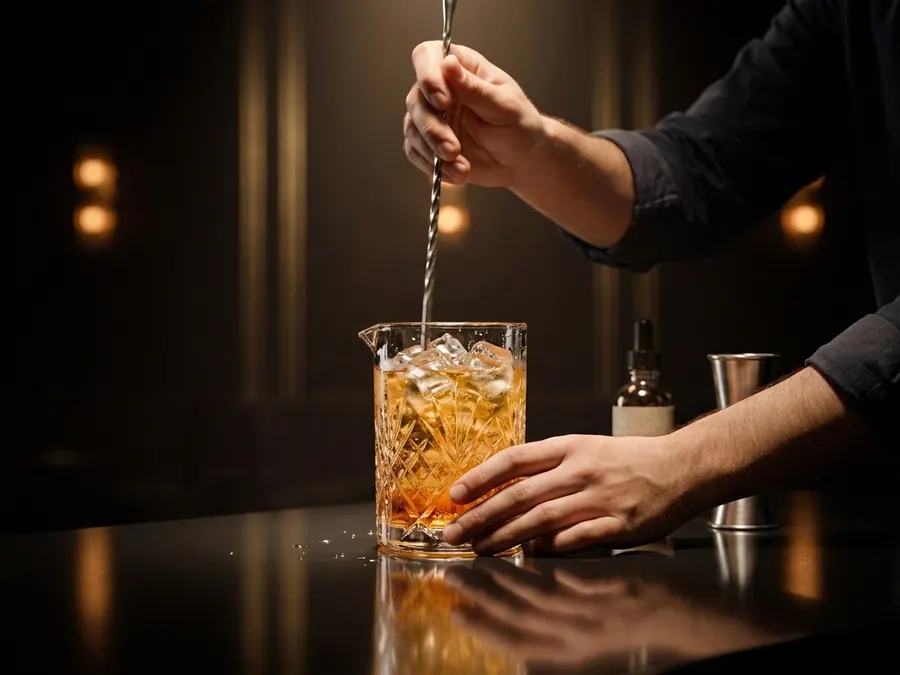
Stirred. It contains only spirits and modifiers, so stirring chills and dilutes it while keeping it clear and silky.
How strong is a Bamboo?
About 13% ABV after dilution, or roughly 0.9 US standard drinks (13 g of alcohol) per serve.
How many calories are in a Bamboo?
Roughly 97 kcal per drink, most of it from alcohol.


