

History of the Alaska
- Origin
- United States
- In print by
- Mid-1910s
- Family
- Spirit-forward
- Base
- Gin
The Alaska is a Martini made with yellow Chartreuse instead of vermouth. It appears in American drink books in the mid-1910s, originally with Old Tom gin. Harry Craddock included it in the Savoy Cocktail Book (1930) with a joke: it was not invented by the Eskimos, but it was the chief cause of the rapid exploration of Alaska.
Yellow Chartreuse is softer and sweeter than green, with honey and saffron notes, so the drink is rich but still dry.
Fun Facts
- Swapping to green Chartreuse makes a punchier "Green Alaska".
- Chartreuse is still made by Carthusian monks in the French Alps.
- A lemon twist lifts the herbal flavour.
Variations
| Variation | What changes |
|---|---|
| Green Alaska | Green Chartreuse |
| Bijou | Adds sweet vermouth, green Chartreuse |
| Dry Martini | Dry vermouth |
Alaska FAQ
What is in an Alaska cocktail?
Gin, yellow Chartreuse and orange bitters.
Why is it called the Alaska?
Nobody knows; the Savoy book only joked about it.
Should I use Old Tom gin?
Old Tom gives the original style; London dry makes it drier.
What glass is an Alaska served in?
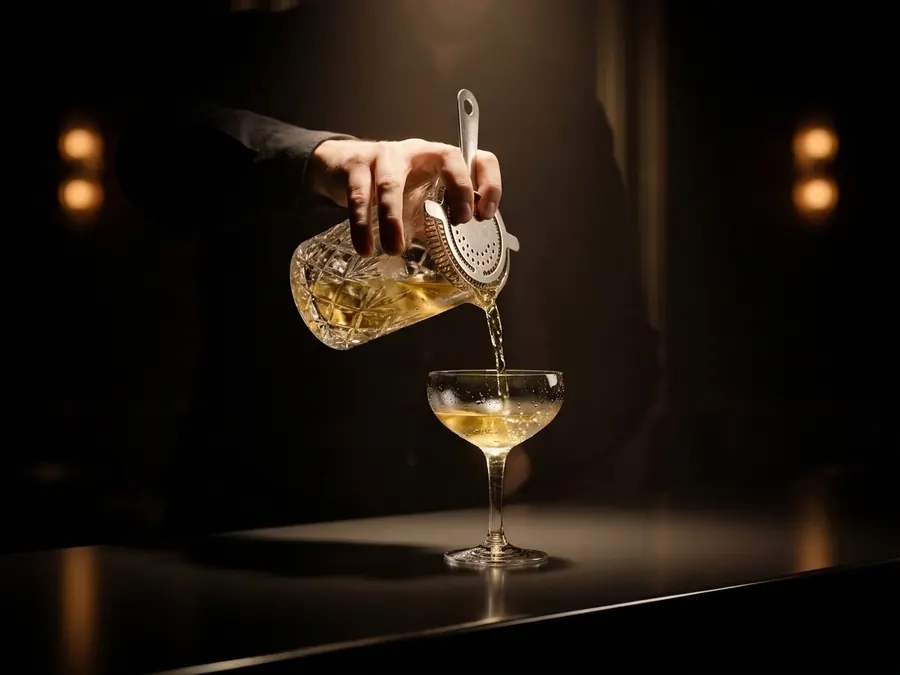
A coupe. The stem keeps your hand away from the cold drink, and the curved rim makes it far harder to spill than a V-shaped martini glass.
Is an Alaska shaken or stirred?
Stirred. It contains only spirits and modifiers, so stirring chills and dilutes it while keeping it clear and silky.
How strong is an Alaska?
About 27% ABV after dilution, or roughly 1.7 US standard drinks (24 g of alcohol) per serve.
How many calories are in an Alaska?
Roughly 186 kcal per drink, most of it from alcohol.
Can I make an Alaska without London dry gin?
Yes. Vodka is the closest substitute, though the drink will taste different.


