
History of the Gin and It
- Origin
- England
- Popular
- Early 1900s
- "It" stands for
- Italian vermouth
- Family
- Spirit-forward
The Gin and It is short for "gin and Italian", meaning Italian sweet vermouth. It was a favourite in British pubs and hotel bars in the first half of the 1900s, often poured in equal parts at room temperature, without ice.
It is a close relative of the Martinez and the sweet Martini. Modern bars stir it with ice, use more gin than vermouth and add a dash of orange bitters, which makes it fresher and less syrupy.
How to Get It Right
- Keep your vermouth in the fridge and use it within a month or so.
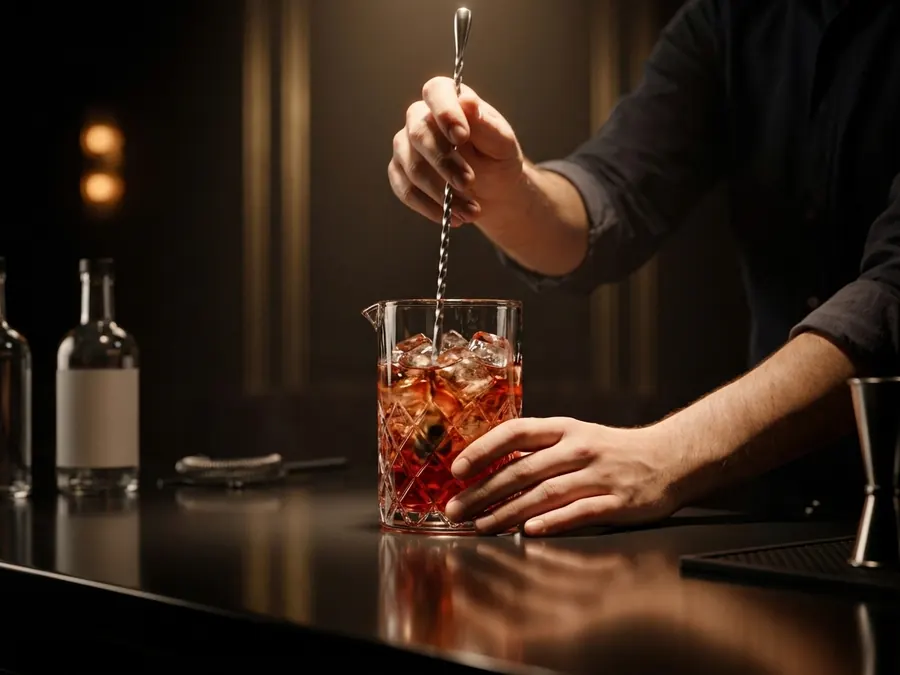
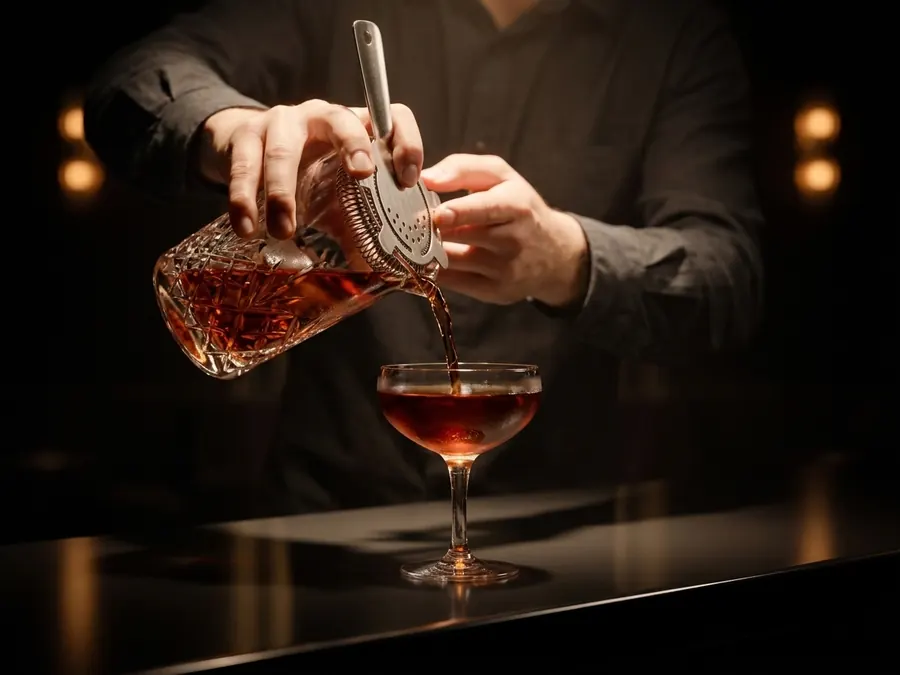
- Stir with ice for 20 to 30 seconds and strain into a chilled coupe.
- Garnish with a cherry, or an orange twist for a brighter drink.
Variations
| Variation | What changes |
|---|---|
| Martinez | Old Tom gin and maraschino |
| Dry Martini | Dry vermouth |
| Negroni | Campari added |
Gin and It FAQ
What does "It" mean in Gin and It?
Italian, as in Italian sweet vermouth.
Is a Gin and It served with ice?
The old pub style is not; modern versions are stirred with ice and served up.
What ratio should I use?
Two parts gin to one part vermouth, or equal parts for the traditional version.
What glass is a Gin and It served in?
A coupe. The stem keeps your hand away from the cold drink, and the curved rim makes it far harder to spill than a V-shaped martini glass.
Is a Gin and It shaken or stirred?
Stirred. It contains only spirits and modifiers, so stirring chills and dilutes it while keeping it clear and silky.
How strong is a Gin and It?
About 23% ABV after dilution, or roughly 1.4 US standard drinks (19 g of alcohol) per serve.
How many calories are in a Gin and It?
Roughly 149 kcal per drink, most of it from alcohol.
Can I make a Gin and It without London dry gin?
Yes. Vodka is the closest substitute, though the drink will taste different.


