
History of the Bijou
- Origin
- United States
- Created
- 1890s
- Credited to
- Harry Johnson
- First printed
- Harry Johnson's Bartenders' Manual, 1900
- Family
- Stirred, spirit-forward
Harry Johnson, one of the great bartenders of the 19th century, printed the Bijou in his 1900 manual. Bijou means jewel in French, and the drink's three ingredients are said to represent three gems: gin for diamond, sweet vermouth for ruby and green Chartreuse for emerald.
The original was equal parts, which makes it powerful and very herbal. Modern bartenders often raise the gin and lower the Chartreuse for balance, but many still love it as written.
Fun Facts
- Green Chartreuse is 55% ABV, so the Bijou is one of the strongest classic stirred drinks.
- Johnson originally called for it to be mixed and served with a cherry or olive.
- The Bijou is a close relative of the Martinez.
Variations
| Variation | What changes |
|---|---|
| Modern Bijou | 45 ml gin, 22.5 ml each of vermouth and Chartreuse |
| Tipperary | Irish whiskey instead of gin |
Bijou FAQ
What does Bijou mean?
Jewel, in French. The ingredients represent diamond, ruby and emerald.
What is in a Bijou?
Gin, sweet vermouth, green Chartreuse and orange bitters.
Is the Bijou strong?
Yes. Green Chartreuse is very strong, so the Bijou packs a punch.
What glass is a Bijou served in?
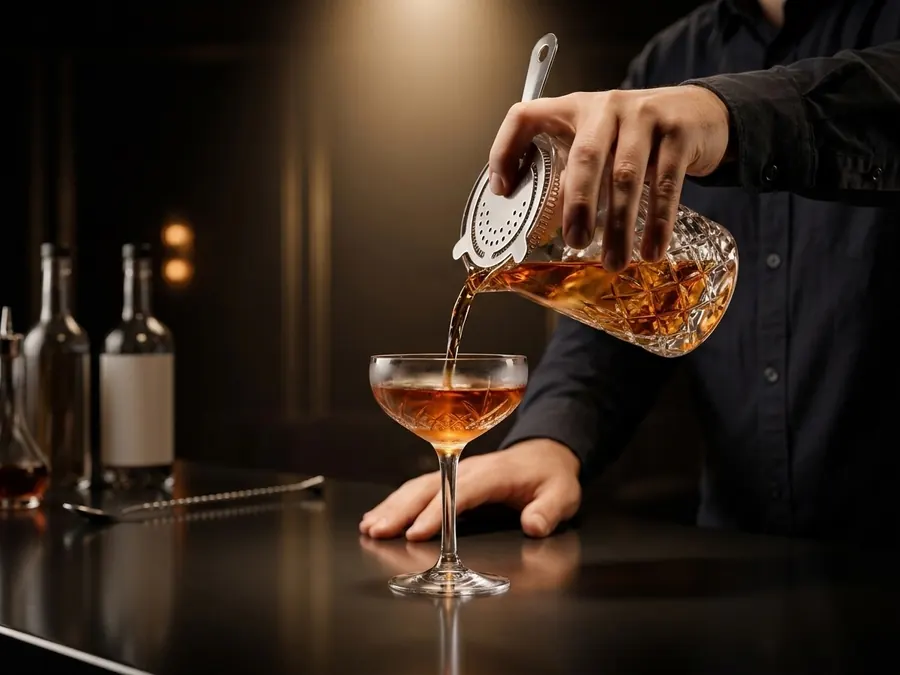
A coupe. The stem keeps your hand away from the cold drink, and the curved rim makes it far harder to spill than a V-shaped martini glass.
Is a Bijou shaken or stirred?
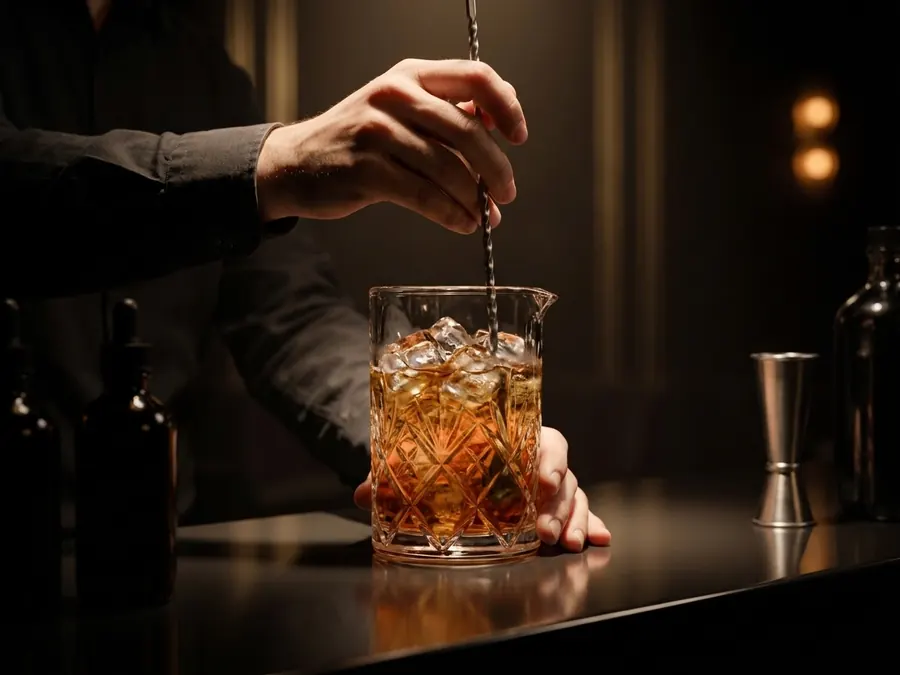
Stirred. It contains only spirits and modifiers, so stirring chills and dilutes it while keeping it clear and silky.
How strong is a Bijou?
About 26% ABV after dilution, or roughly 1.9 US standard drinks (26 g of alcohol) per serve.
How many calories are in a Bijou?
Roughly 233 kcal per drink, most of it from alcohol.
Can I make a Bijou without London dry gin?
Yes. Vodka is the closest substitute, though the drink will taste different.


