
History of the Shandy
- Origin
- England
- Dates from
- 19th century
- German name
- Radler
- Family
- Beer highball
The shandy comes from the 19th-century English "shandygaff", beer mixed with ginger beer or ginger ale. Over time lemonade became the usual partner, and the name was shortened to shandy.
In Germany the same drink is called a Radler ("cyclist"). A popular story says Bavarian innkeeper Franz Xaver Kugler mixed beer with lemonade in 1922 to stretch his beer for thousands of thirsty cyclists.
Around the World
| Country | Name | Mix |
|---|---|---|
| UK | Shandy | Beer and lemonade |
| Germany | Radler / Alsterwasser | Lager and lemon soda |
| France | Panaché | Beer and lemonade |
| Spain | Clara | Beer and lemon soda |
Fun Facts
- Bottled shandies are often so light they sit next to the soft drinks in shops.
- Ginger beer gives the original shandygaff style.
- Bottled Radlers are sold all over Europe.
Shandy FAQ
What is a shandy?
Beer mixed with lemonade, usually half and half.
What is the difference between a shandy and a Radler?
They are the same idea; Radler is the German name.
Which beer should I use?
A light lager or pale ale.
What glass is a Shandy served in?
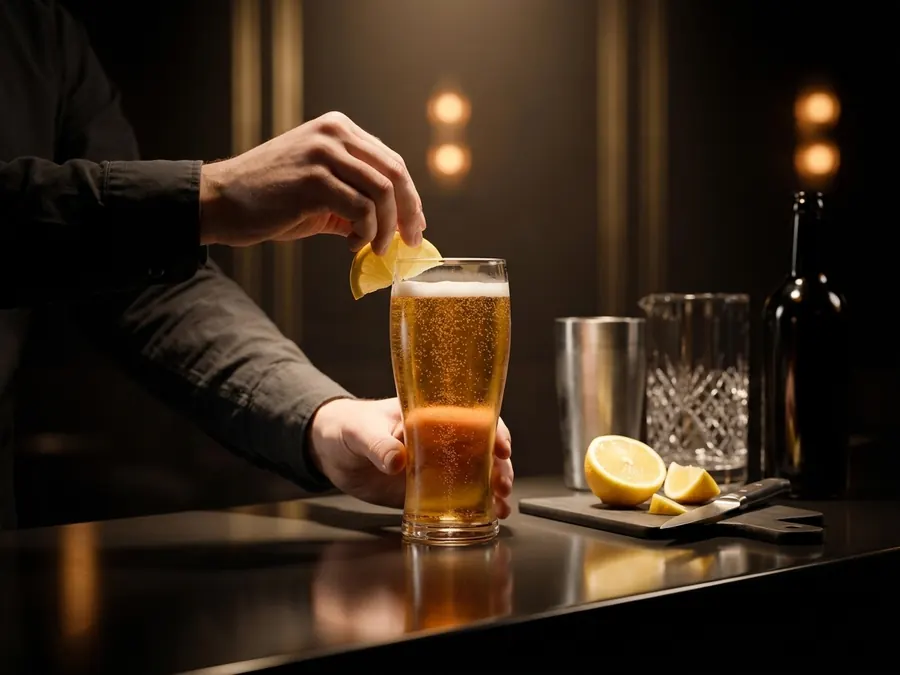
A highball glass. A narrow column of liquid loses bubbles slowly, and a full load of ice keeps the drink cold without watering it down fast.
Is a Shandy shaken or stirred?
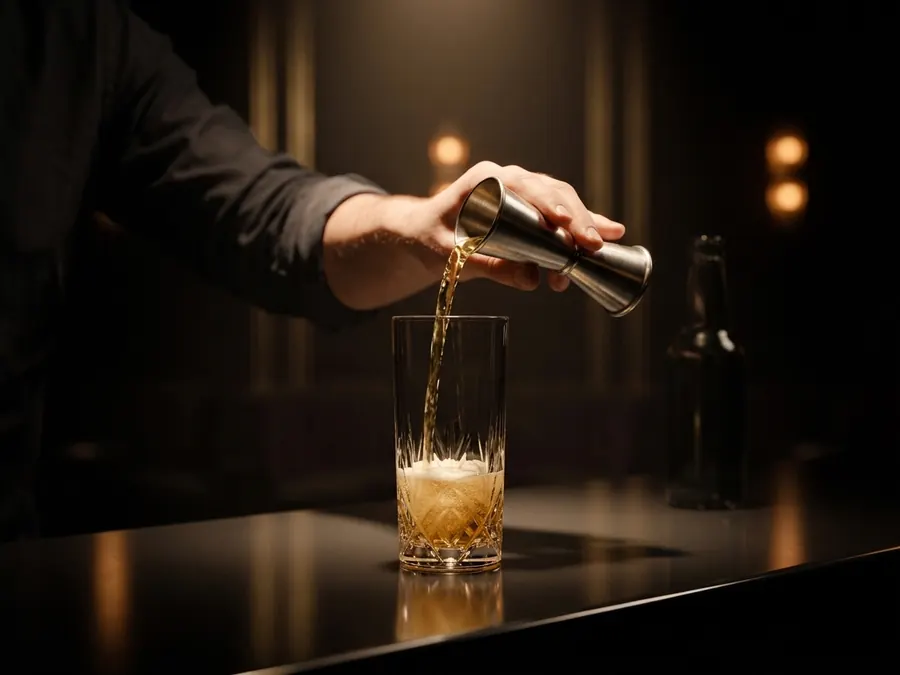
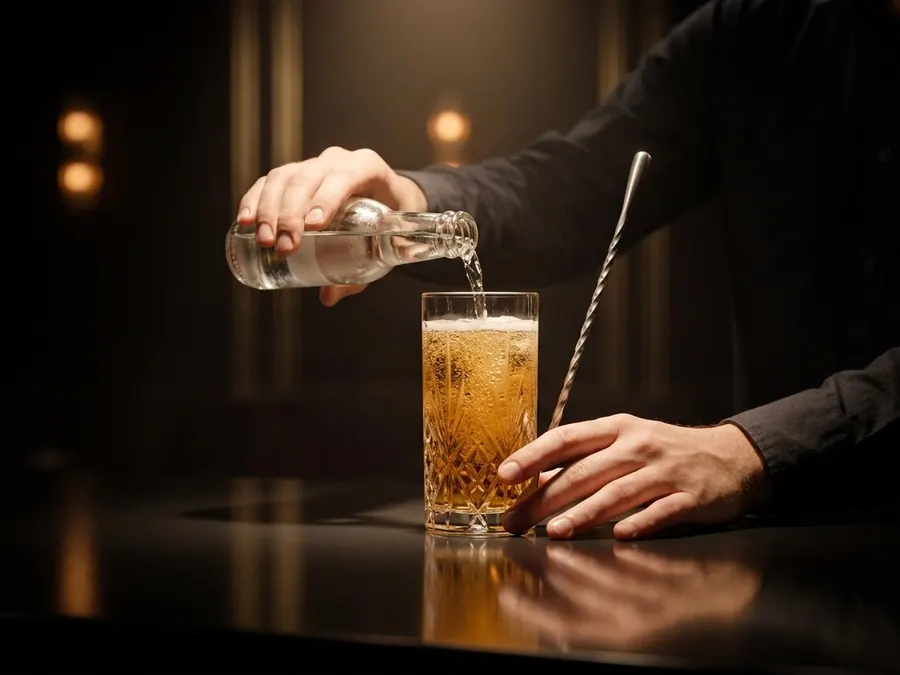
Neither. It is built directly in the glass and given a gentle stir.
How strong is a Shandy?
About 3% ABV after dilution, or roughly 0.5 US standard drinks (7 g of alcohol) per serve.
How many calories are in a Shandy?
Roughly 139 kcal per drink, most of it from alcohol and sugar.


