
History of the Chilcano
- Origin
- Peru
- Created
- Early 20th century
- Family
- Highball
Italian immigrants in Peru are said to have enjoyed grappa with ginger ale, a drink called buon brodo. Swapping in local pisco created the Chilcano, named after a Peruvian fish soup said to cure hangovers. It's now Peru's favourite highball, with its own Chilcano Week each January.
Fun Facts
- Peru celebrates Semana del Chilcano in January.
- Fruit-infused piscos make popular variations.
- A few drops of bitters on top add aroma.
Variations
| Variation | What changes |
|---|---|
| Pisco Sour | Egg white, shaken |
| Chilcano de maracuyá | Passion fruit |
Chilcano FAQ
What is in a Chilcano?
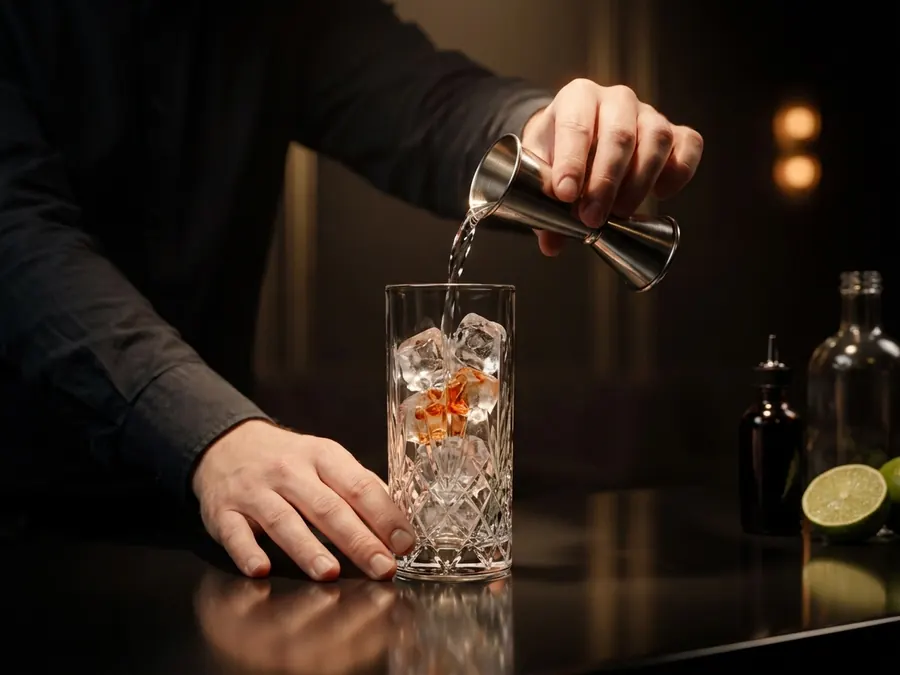
Pisco, lime, ginger ale and bitters.
Where does the name come from?
From a Peruvian fish soup considered a hangover cure.
What pisco is best?
A Quebranta or acholado pisco.
What glass is a Chilcano served in?
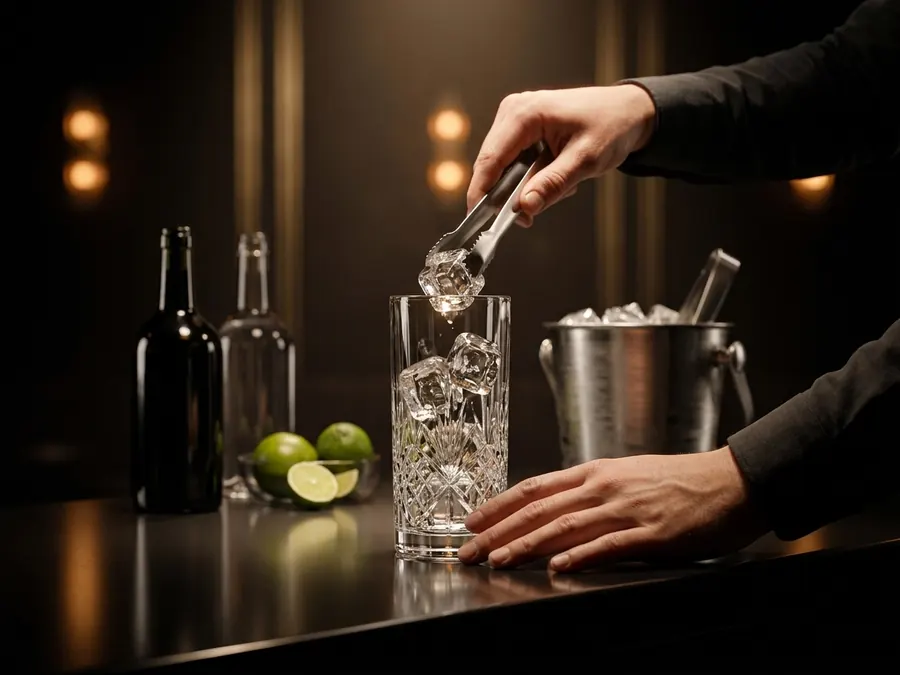
A highball glass. A narrow column of liquid loses bubbles slowly, and a full load of ice keeps the drink cold without watering it down fast.
Is a Chilcano shaken or stirred?
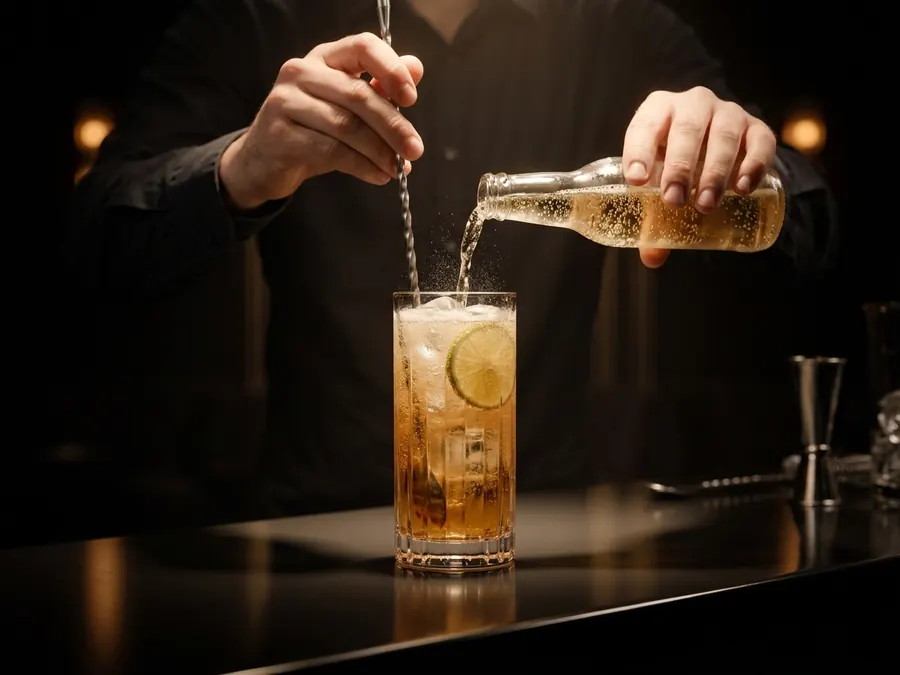
Neither. It is built directly in the glass and given a gentle stir.
How strong is a Chilcano?
About 11% ABV after dilution, or roughly 1.2 US standard drinks (17 g of alcohol) per serve.
How many calories are in a Chilcano?
Roughly 162 kcal per drink, most of it from alcohol.
Can I make a Chilcano without pisco?
Yes. Cognac is the closest substitute, though the drink will taste different.


