
History of the Pink Gin
- Origin
- Royal Navy, Plymouth, England
- Created
- 19th century
- Family
- Spirit-forward
- Base
- Plymouth gin and Angostura
Angostura bitters were created in 1824 by Dr Johann Siegert, a German army surgeon in Venezuela, as a remedy for stomach complaints. British sailors brought them home, and Royal Navy officers began taking their medicine with the gin issued from Plymouth. The bitters turned the gin pale pink, and Pink Gin became the drink of the officers' wardroom for more than a century.
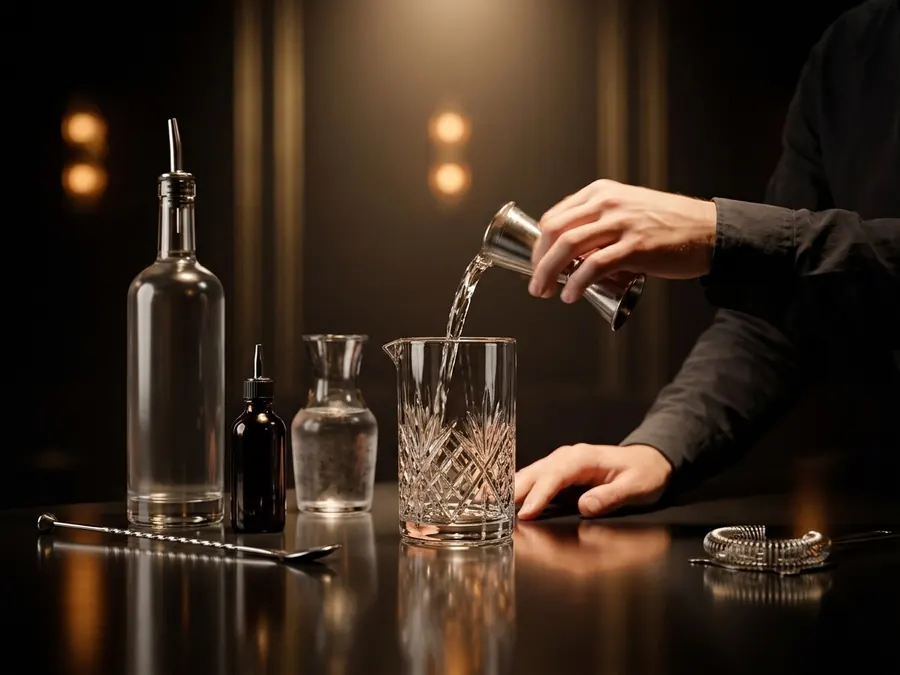
The classic naval method is simple: shake a few dashes of bitters into a glass, swirl and tip out what does not cling, and pour in gin, with a little water or ice. It has nothing to do with the sweet, fruit-flavoured pink gins that became popular in the 2010s.
How to Get It Right
- Use Plymouth gin for tradition, or any London dry gin.
- "Gin and bitters in" leaves the bitters in the glass; "out" means you swirl and discard them.
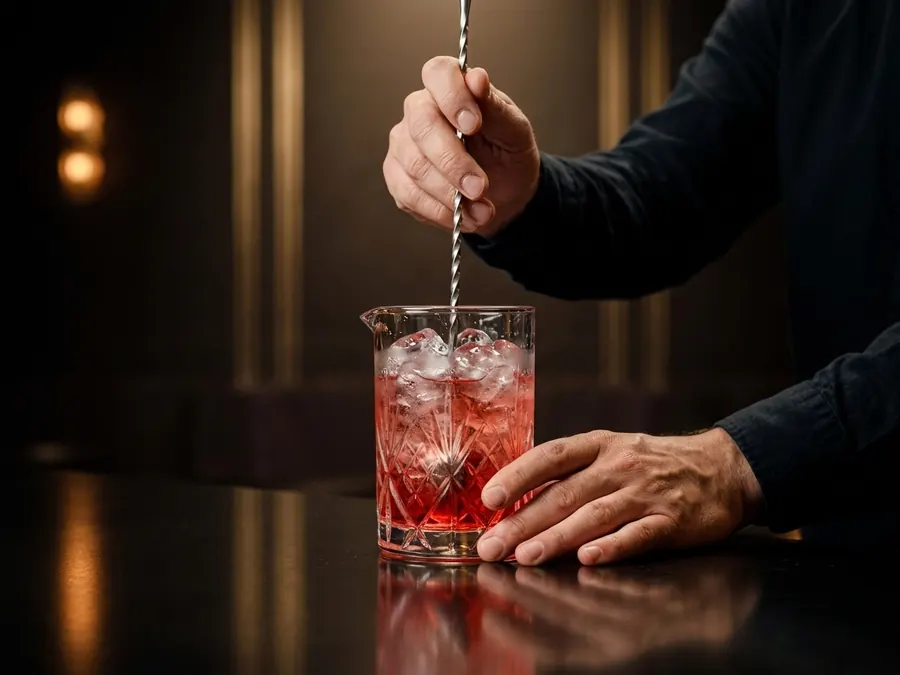
- Serve very cold, stirred with ice or with a splash of chilled water.
Fun Facts
- Plymouth Gin has been distilled in the Black Friars distillery since 1793.
- Angostura's oversized paper label dates from a printing mistake that the company kept.
Variations
| Variation | What changes |
|---|---|
| Dry Martini | Dry vermouth instead of bitters |
| Gin and Tonic | Another drink that began as naval medicine |
| Gimlet | Gin and lime, the navy's scurvy cure |
Pink Gin FAQ
What is a traditional Pink Gin?
Gin with a few dashes of Angostura bitters, which turn it pink.
Is Pink Gin the same as pink flavoured gin?
No. The classic Pink Gin is dry and bitter; modern pink gins are sweetened and fruit-flavoured.
Should Pink Gin be served with ice?
Either way: with ice, chilled water or stirred and served straight up.
What glass is a Pink Gin served in?
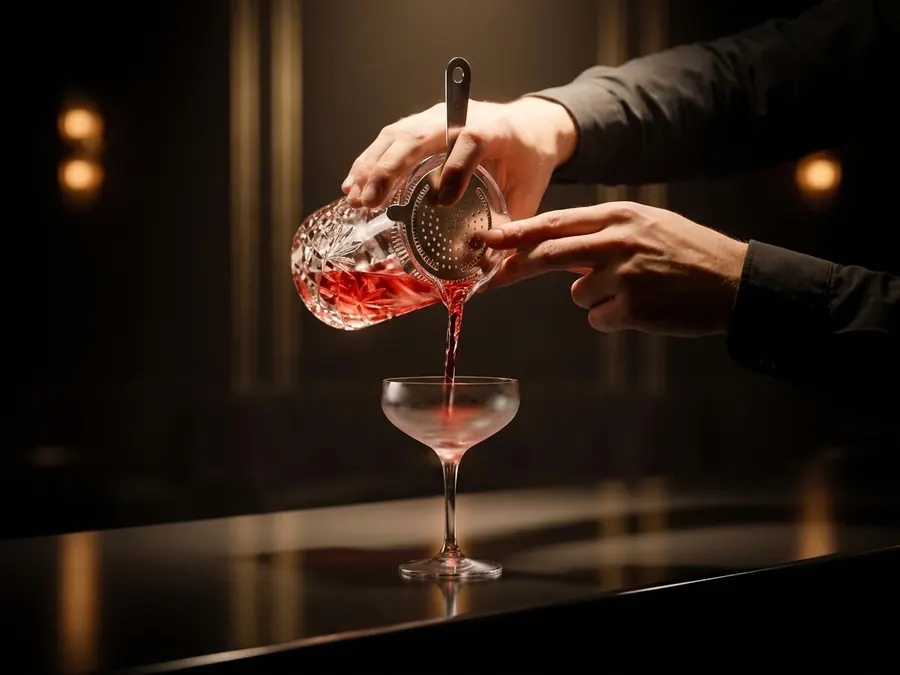
A coupe. The stem keeps your hand away from the cold drink, and the curved rim makes it far harder to spill than a V-shaped martini glass.
Is a Pink Gin shaken or stirred?
Stirred. It contains only spirits and modifiers, so stirring chills and dilutes it while keeping it clear and silky.
How strong is a Pink Gin?
About 23% ABV after dilution, or roughly 1.4 US standard drinks (20 g of alcohol) per serve.
How many calories are in a Pink Gin?
Roughly 140 kcal per drink, most of it from alcohol.
Can I make a Pink Gin without London dry gin?
Yes. Vodka is the closest substitute, though the drink will taste different.


