
History of the Angel Face
- Origin
- London
- First printed
- 1930, in the Savoy Cocktail Book
- Family
- Equal parts, shaken
The Angel Face is one of hundreds of drinks Harry Craddock collected in The Savoy Cocktail Book in 1930. It mixes equal parts gin, apricot brandy and calvados, a combination of orchard fruits and juniper with no citrus at all.
It was largely forgotten until the craft cocktail revival, when bartenders rediscovered it as a strong, aromatic alternative to the Martini for people who like fruit flavours. With good, dry apricot liqueur it is surprisingly elegant.
Fun Facts
- Despite having no citrus, it is traditionally shaken, not stirred.
- Apricot "brandy" in old recipes usually meant apricot liqueur.
- It works beautifully as a pre-dinner drink in autumn.
Variations
| Variation | What changes |
|---|---|
| Stirred Angel Face | Clearer, silkier |
| Paradise | Apricot with gin and orange juice |
Angel Face FAQ
What is in an Angel Face?
Equal parts gin, apricot liqueur and calvados.
Where does the Angel Face come from?
It was printed in the Savoy Cocktail Book in London in 1930.
Is it sweet?
Moderately: the apricot liqueur adds sweetness, balanced by gin and apple brandy.
What glass is an Angel Face served in?
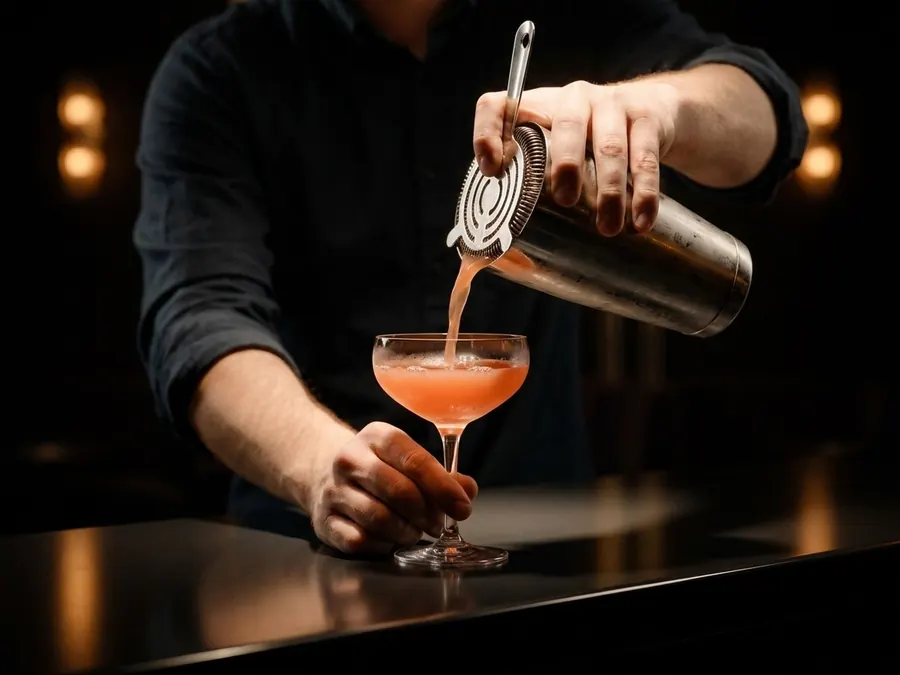
A coupe. The stem keeps your hand away from the cold drink, and the curved rim makes it far harder to spill than a V-shaped martini glass.
Is an Angel Face shaken or stirred?
Shaken. It contains citrus, juice, cream or egg, which need the force and aeration of shaking.
How strong is an Angel Face?
About 21% ABV after dilution, or roughly 1.8 US standard drinks (25 g of alcohol) per serve.
How many calories are in an Angel Face?
Roughly 205 kcal per drink, most of it from alcohol.
Can I make an Angel Face without London dry gin?
Yes. Vodka is the closest substitute, though the drink will taste different.


