
History of White Sangria
- Origin
- Spain
- Popular from
- 1970s
- Family
- Wine punch
- Base
- White wine
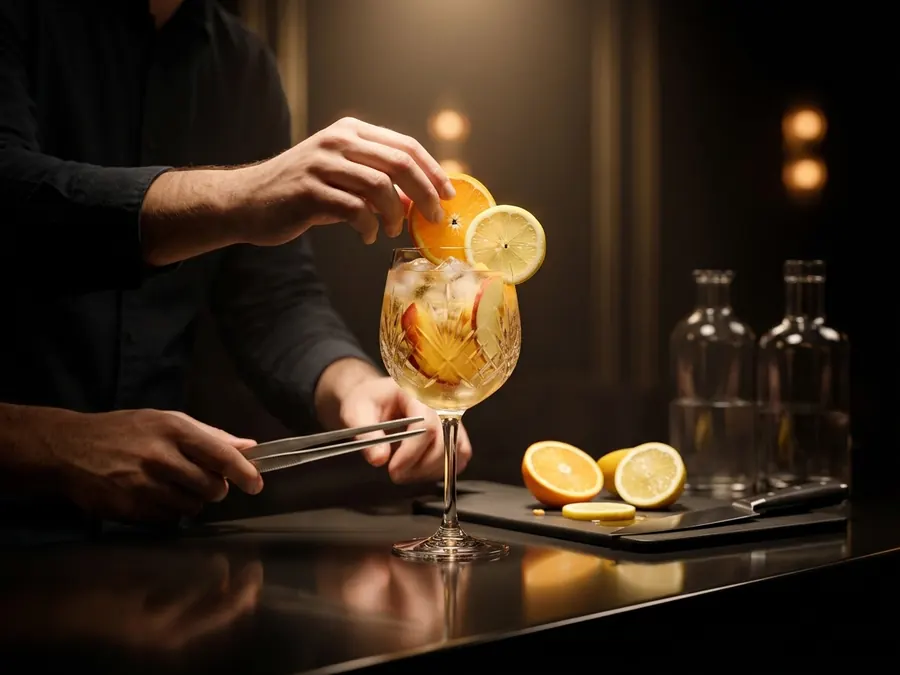
Sangria is Spain's famous wine punch, named after sangre (blood) for its red colour. White sangria, sangría blanca, uses white wine and lighter fruits like peach, apple, citrus and grapes. It became popular as sangria spread to restaurants worldwide from the 1960s onwards.
The best white sangria rests for a few hours so the fruit flavours the wine.
Fun Facts
- Under EU rules, a drink sold under the plain name "sangria" must be made in Spain or Portugal.
- Sparkling water or cava on top makes it livelier.
- Dry, fruity white wines such as Albariño or Verdejo work best.
Variations
| Variation | What changes |
|---|---|
| Sangria | Red wine |
| Cava Sangria | Sparkling wine |
| Tinto de Verano | Red wine and lemon soda |
White Sangria FAQ
What wine is best for white sangria?
A dry, fruity white like Albariño, Verdejo or Sauvignon Blanc.
How long should white sangria rest?
Two to four hours in the fridge.
Can I make it without brandy?
Yes, it will be lighter.
What glass is a White Sangria served in?
A wine glass. A big bowl holds lots of ice and gathers aroma toward the rim, which flatters fruity and botanical drinks.
Is a White Sangria shaken or stirred?
Neither. It is built directly in the glass and given a gentle stir.
How strong is a White Sangria?
About 11% ABV after dilution, or roughly 1.3 US standard drinks (18 g of alcohol) per serve.
How many calories are in a White Sangria?
Roughly 192 kcal per drink, most of it from alcohol and sugar.
Can I make a White Sangria without cognac?
Yes. Bourbon is the closest substitute, though the drink will taste different.


