
History of Mulled Wine
- Origin
- Europe, from Roman times
- Known as
- Glühwein (Germany), vin chaud (France), glögg (Sweden)
- Family
- Hot drink
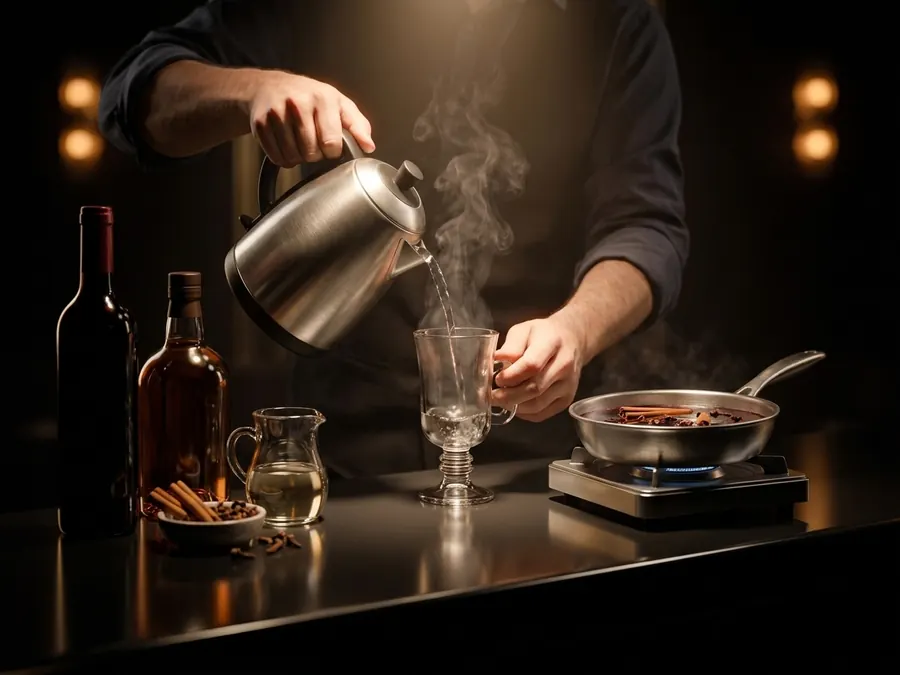
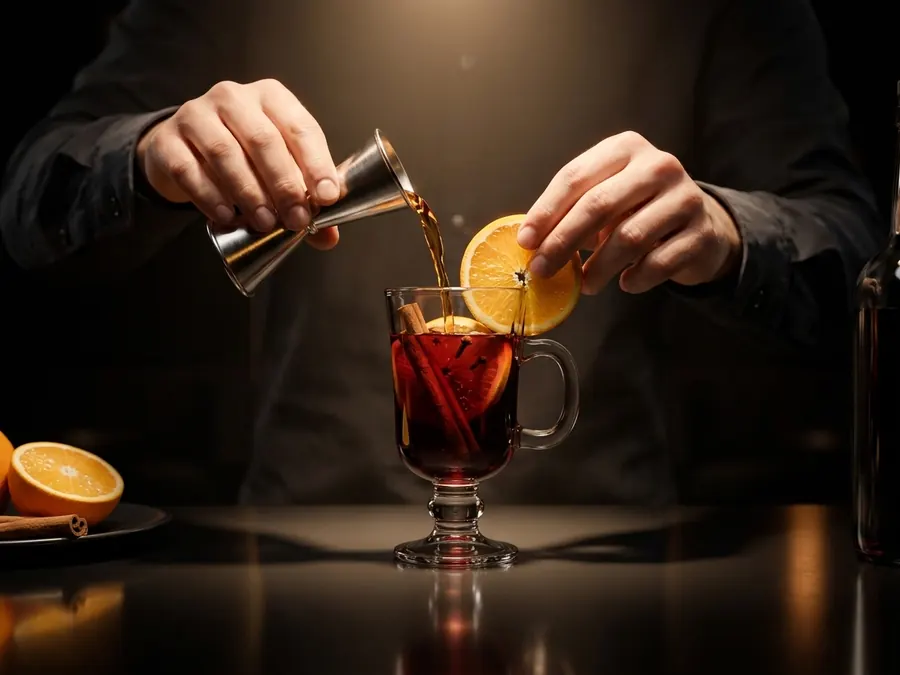
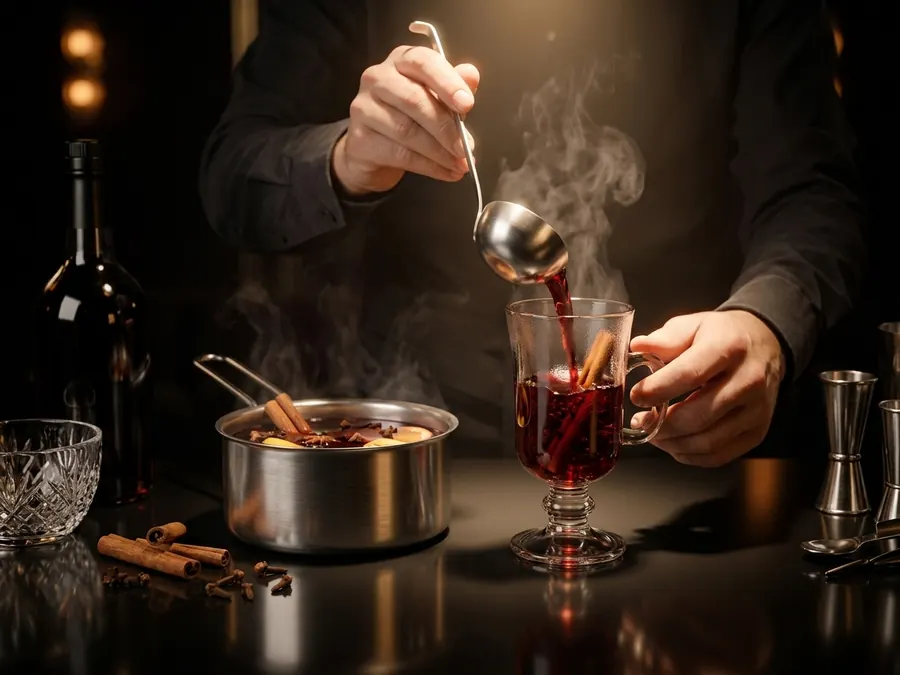
The Romans heated wine with spices to fight the cold, and the custom spread across Europe. In the Middle Ages spiced wine called hippocras was a luxury. Today mulled wine is the drink of Christmas markets: red wine gently warmed with sugar, cinnamon, cloves and orange, sometimes fortified with brandy.
Fun Facts
- Swedish glögg is served with raisins and almonds.
- German Christmas markets serve Glühwein in souvenir mugs.
- Boiling burns off alcohol and aroma.
Variations
| Variation | What changes |
|---|---|
| Glögg | Aquavit, raisins and almonds |
| White mulled wine | White wine and honey |
Mulled Wine FAQ
What is in mulled wine?
Red wine, sugar, cinnamon, cloves, orange and often brandy.
Should mulled wine boil?
No, heat it gently.
What wine should I use?
A fruity, inexpensive red.
What glass is a Mulled Wine served in?
An Irish coffee glass. Tempered glass handles boiling liquid, and seeing the layer of cream over black coffee is part of the pleasure.
Is a Mulled Wine shaken or stirred?
Neither. It is built directly in the glass and given a gentle stir.
How strong is a Mulled Wine?
About 14% ABV after dilution, or roughly 1.4 US standard drinks (20 g of alcohol) per serve.
How many calories are in a Mulled Wine?
Roughly 182 kcal per drink, most of it from alcohol.
Can I make a Mulled Wine without cognac?
Yes. Bourbon is the closest substitute, though the drink will taste different.


