
History of Eggnog
- Origin
- Britain and the American colonies
- Created
- 1700s, from medieval posset
- Family
- Creamy, holiday
Eggnog descends from posset, a medieval British drink of hot milk curdled with ale or wine and spiced. In the American colonies, where milk, eggs and rum were plentiful, it became eggnog. George Washington served a famously strong version mixing brandy, rye, rum and sherry. The name may come from "noggin", a small wooden cup, and "grog".
Fun Facts
- Washington's recipe didn't specify the number of eggs.
- In 1826 an eggnog riot broke out at West Point military academy.
- Aged eggnog, kept in the fridge for weeks, is a modern trend.
Variations
| Variation | What changes |
|---|---|
| Tom and Jerry | Served hot |
| Advocaat | Dutch egg liqueur |
| Rum eggnog | Aged rum |
Eggnog FAQ
What is in eggnog?
Eggs, milk, cream, sugar and spirits like bourbon, brandy or rum, with nutmeg.
Is raw egg safe?
Use fresh, pasteurised eggs.
Where does the name come from?
Probably from "noggin", a small cup, and "grog".
What glass is an Eggnog served in?
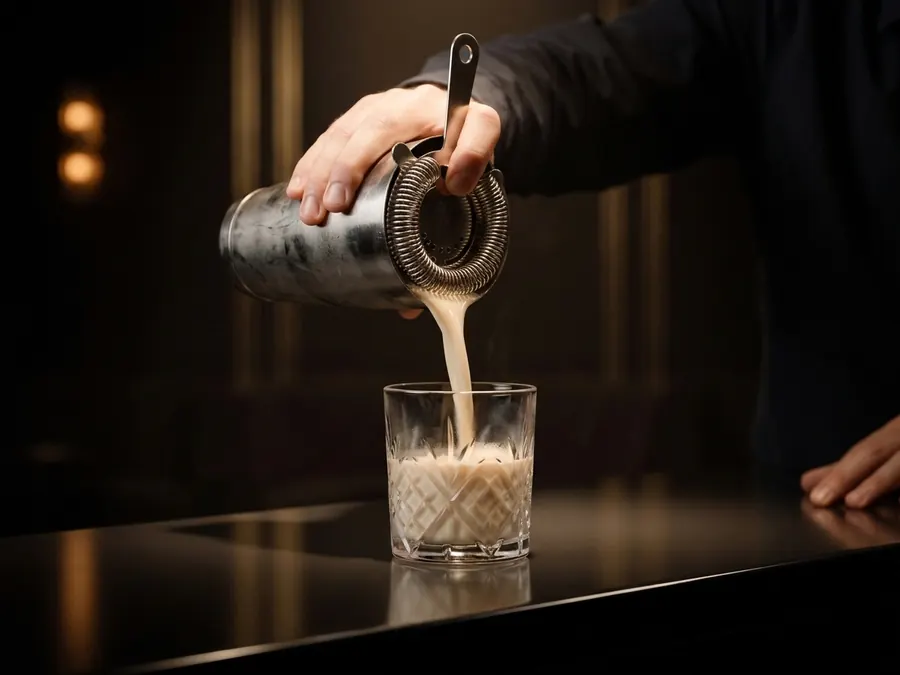
A rocks glass. The wide mouth puts the aroma of a citrus twist right under your nose, and the heavy base survives muddling and stirring in the glass.
Is an Eggnog shaken or stirred?
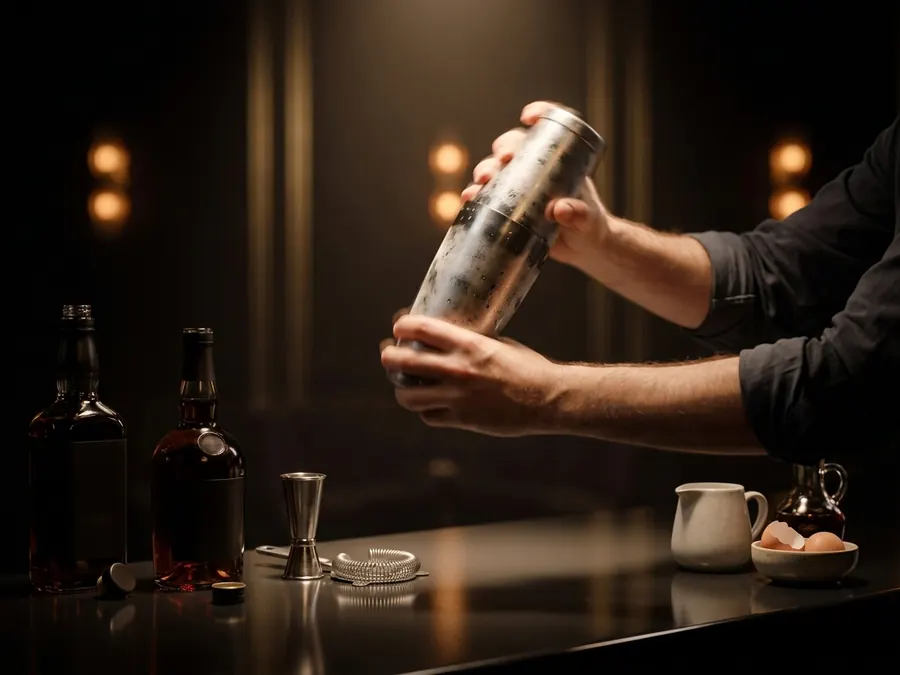
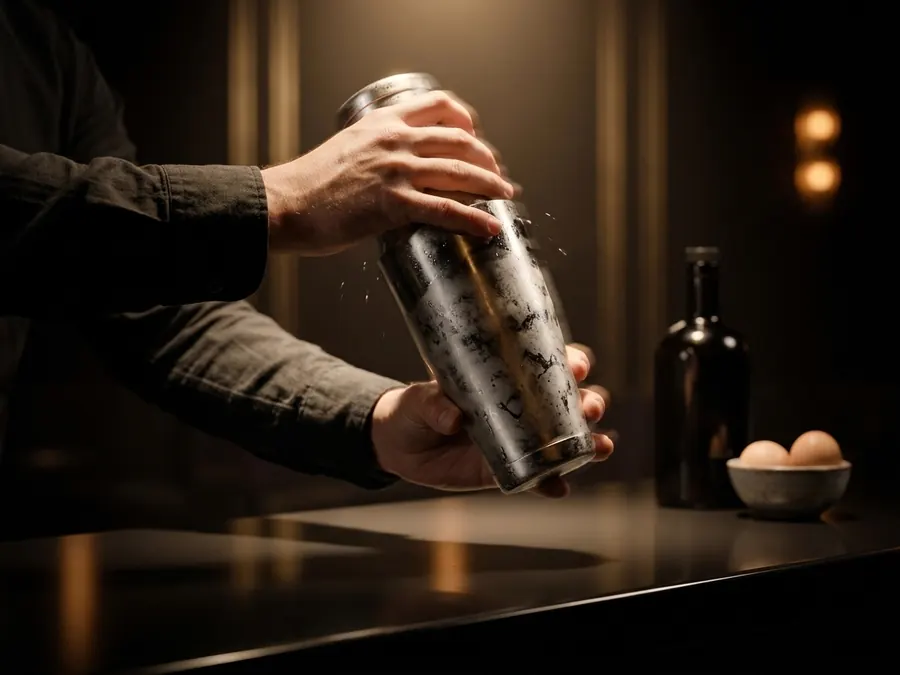
Shaken. It contains citrus, juice, cream or egg, which need the force and aeration of shaking.
How strong is an Eggnog?
About 8% ABV after dilution, or roughly 1.1 US standard drinks (15 g of alcohol) per serve.
How many calories are in an Eggnog?
Roughly 322 kcal per drink, most of it from alcohol and sugar.
Can I make an Eggnog without bourbon?
Yes. Rye Whiskey is the closest substitute, though the drink will taste different.


