
History of Glögg
- Origin
- Sweden
- Created
- Christmas tradition from the 1800s
- Family
- Hot wine
- Served with
- Raisins and blanched almonds
Spiced wine has been drunk in Sweden since at least the 1500s, when sweetened, spiced wines with names like "glödgad vin", glowing wine, were served at court. In the late 19th century, glögg became the Christmas drink of ordinary Swedish homes, and wine merchants began selling bottled glögg with decorated Christmas labels.
Swedish glögg is stronger than German Glühwein: it is usually fortified with port, vodka or aquavit. It is served in small cups with a spoonful of raisins and blanched almonds, and is drunk with gingerbread and saffron buns through Advent.
Basic Glögg for a Party
750 ml red wine, 200 ml port, 100 ml vodka or aquavit, 100 g sugar.
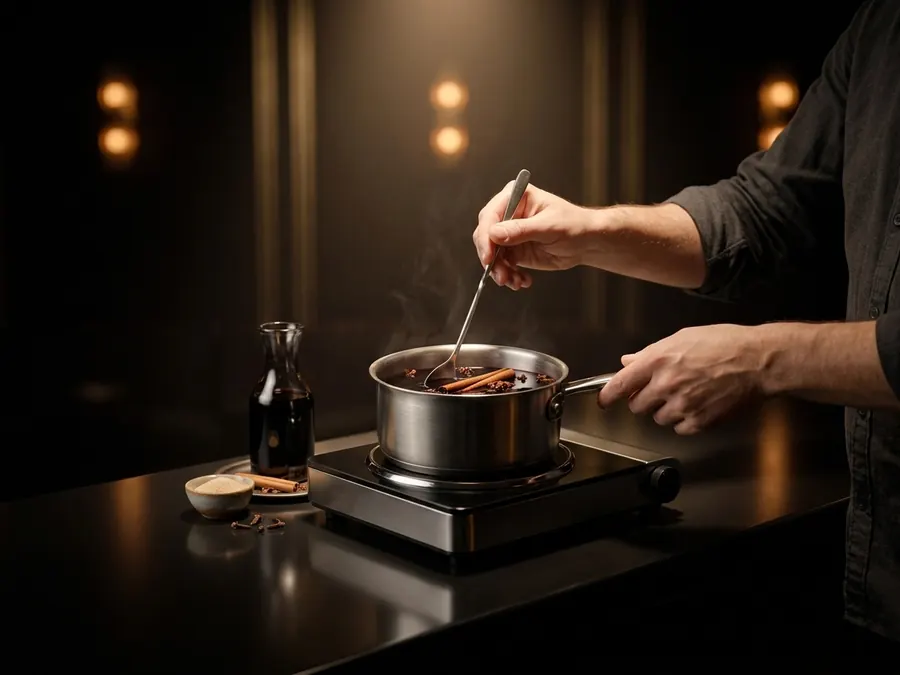
2 cinnamon sticks, 8 cloves, 4 cardamom pods, a strip of orange peel and a slice of ginger.
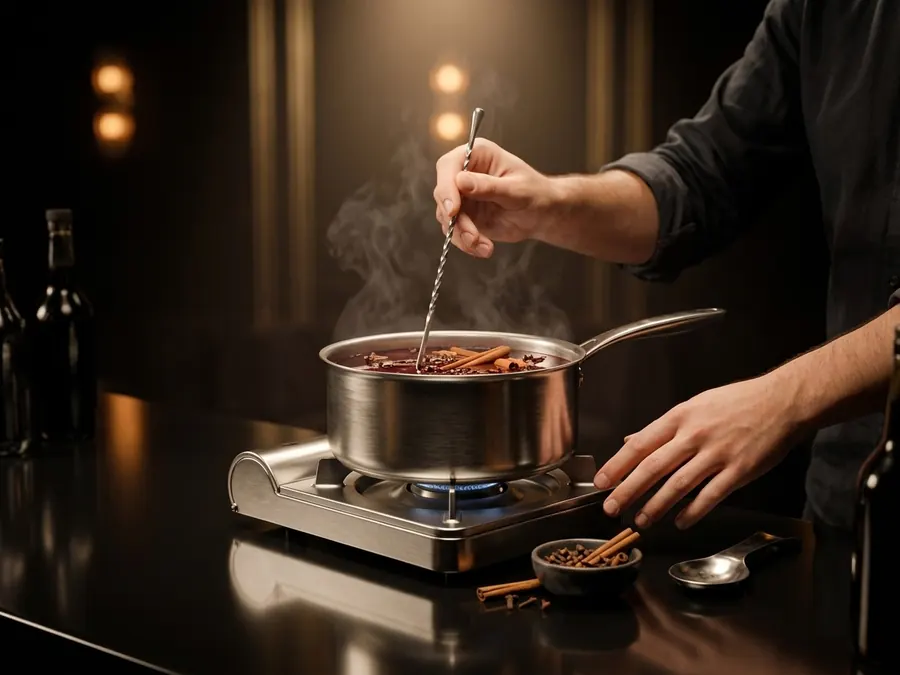
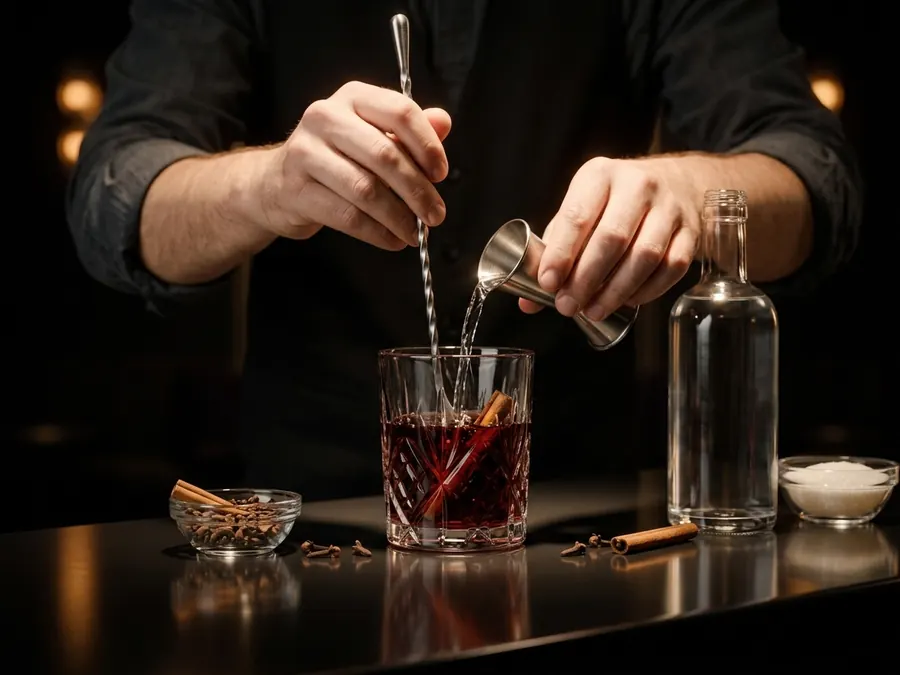
Heat gently without boiling, infuse for an hour, then add the spirit and serve with raisins and almonds.
How to Get It Right
- Never boil it; the alcohol and aromas evaporate.
- Infuse the spices on very low heat for at least 30 minutes.
- Add the spirit at the end.
Fun Facts
- Glögg parties, glöggmingel, are a fixture of the Swedish Christmas season.
- Finland's glögi and Norway's gløgg are close relatives.
- Alcohol-free glögg made with berry juice is also very popular.
Variations
| Variation | What changes |
|---|---|
| Mulled Wine | No spirit, lighter |
| Feuerzangenbowle | Flaming rum sugar |
| Hot Toddy | Whisky, honey and lemon |
Glögg FAQ
What is the difference between glögg and mulled wine?
Glögg is usually stronger, fortified with port, vodka or aquavit, and served with raisins and almonds.
How do you serve glögg?
Hot in small cups, with raisins and blanched almonds and a spoon.
Can you make glögg ahead?
Yes. Infuse the wine and spices, cool and reheat gently before serving.
What glass is a Glögg served in?
An Irish coffee glass. Tempered glass handles boiling liquid, and seeing the layer of cream over black coffee is part of the pleasure.
Is a Glögg shaken or stirred?
Neither. It is built directly in the glass and given a gentle stir.
How strong is a Glögg?
About 16% ABV after dilution, or roughly 1.7 US standard drinks (23 g of alcohol) per serve.
How many calories are in a Glögg?
Roughly 397 kcal per drink, most of it from alcohol and sugar.
Can I make a Glögg without vodka?
Yes. London Dry Gin is the closest substitute, though the drink will taste different.


