
History of the Gin Fizz
- Origin
- United States
- Created
- 1870s
- First printed
- Jerry Thomas's guide, 1876
- Family
- Fizz
The fizz appeared in print in the 1876 edition of Jerry Thomas's guide and was enormously popular by 1900, especially in New Orleans and as a morning drink. A fizz differs from a Collins in being shaken and served without ice, with only a short splash of soda, so it's sharper and more concentrated.
The Gin Fizz is the parent of a family: the Silver Fizz (with egg white), the Golden Fizz (egg yolk), the Royal Fizz (whole egg) and the Ramos Gin Fizz.
Fun Facts
- In the early 1900s, some bars specialised in fizzes for the morning crowd.
- A fizz should be drunk quickly, before the bubbles fade.
- Adding Champagne instead of soda makes a Diamond Fizz.
Variations
| Variation | What changes |
|---|---|
| Silver Fizz | Egg white |
| Golden Fizz | Egg yolk |
| Tom Collins | Served over ice with more soda |
Gin Fizz FAQ
What is the difference between a Gin Fizz and a Tom Collins?
A fizz is served without ice and with less soda; a Collins is served tall over ice.
Does a Gin Fizz have egg white?
The basic version doesn't; with egg white it's a Silver Fizz.
Is a Gin Fizz shaken?
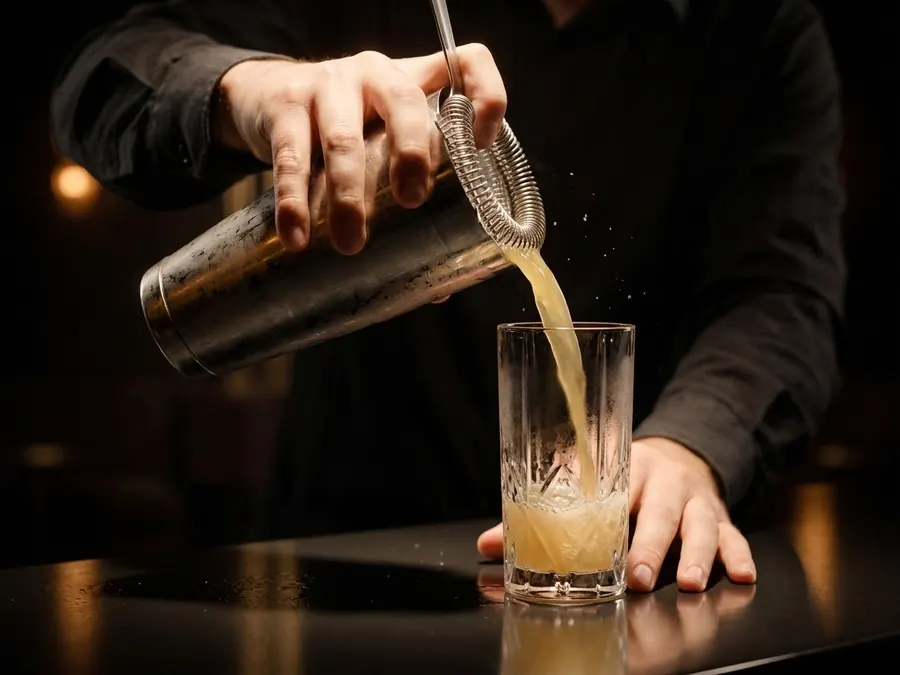
Yes, then topped with soda.
What glass is a Gin Fizz served in?
A highball glass. A narrow column of liquid loses bubbles slowly, and a full load of ice keeps the drink cold without watering it down fast.
Is a Gin Fizz shaken or stirred?
Shaken. It contains citrus, juice, cream or egg, which need the force and aeration of shaking.
How strong is a Gin Fizz?
About 11% ABV after dilution, or roughly 1.4 US standard drinks (19 g of alcohol) per serve.
How many calories are in a Gin Fizz?
Roughly 188 kcal per drink, most of it from alcohol.
Can I make a Gin Fizz without London dry gin?
Yes. Vodka is the closest substitute, though the drink will taste different.


