
History of the Derby
- Origin
- Trader Vic's, San Francisco, United States
- Created
- 1947 in print
- Source
- Trader Vic's Bartender's Guide
- Family
- Sour
Several unrelated drinks are called the Derby. This one, bourbon, sweet vermouth, orange curaçao and lime, comes from Trader Vic's Bartender's Guide of 1947. It is a juicy, rounded whiskey sour, with vermouth adding depth and curaçao adding orange.
A completely different Derby, made with gin, peach bitters and mint, was on the IBA official list until 2020. The bourbon version is the one most bartenders make today, especially around the Kentucky Derby in May.
How to Get It Right
- Use a bourbon around 45% ABV.
- Fresh lime juice, not lemon, is part of the recipe.
- A mint leaf garnish nods to Kentucky.
Fun Facts
- The Kentucky Derby has been run at Churchill Downs since 1875.
- The Mint Julep is the official drink of the Kentucky Derby.
- Trader Vic's guide covers far more than tiki drinks.
Variations
| Variation | What changes |
|---|---|
| Whiskey Sour | Lemon and sugar, no vermouth |
| Brown Derby | Bourbon, grapefruit and honey |
| Mint Julep | Bourbon, mint and sugar on crushed ice |
Derby FAQ
What is in a Derby cocktail?
Bourbon, sweet vermouth, orange curaçao and lime juice.
Is the Derby the drink of the Kentucky Derby?
No; that is the Mint Julep, but the Derby is a popular alternative.
Why are there several Derby cocktails?
The name was used for different drinks; this one is Trader Vic's 1947 recipe.
What glass is a Derby served in?
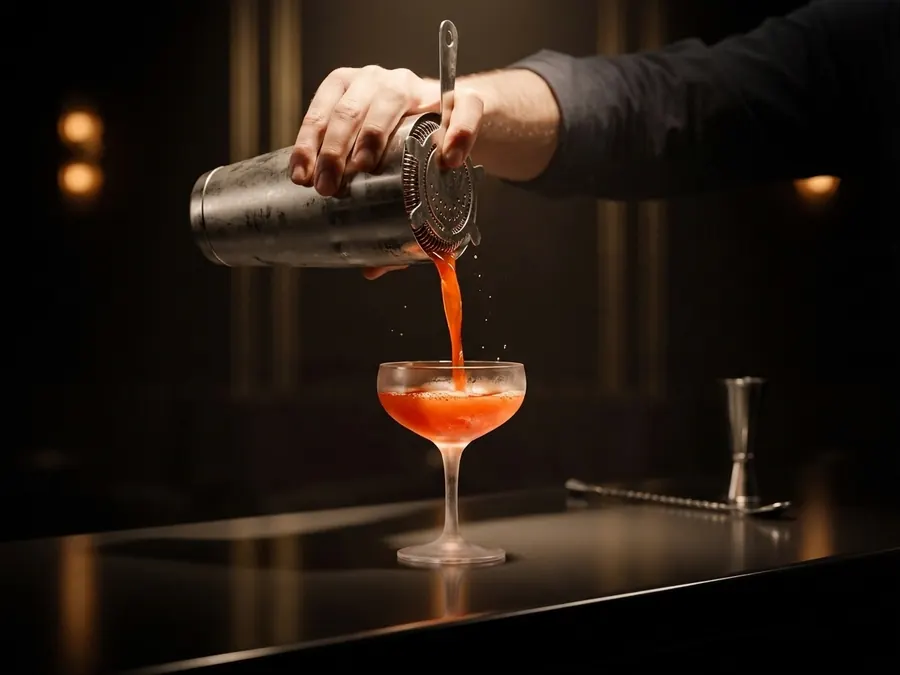
A coupe. The stem keeps your hand away from the cold drink, and the curved rim makes it far harder to spill than a V-shaped martini glass.
Is a Derby shaken or stirred?
Shaken. It contains citrus, juice, cream or egg, which need the force and aeration of shaking.
How strong is a Derby?
About 19% ABV after dilution, or roughly 1.6 US standard drinks (23 g of alcohol) per serve.
How many calories are in a Derby?
Roughly 186 kcal per drink, most of it from alcohol.
Can I make a Derby without bourbon?
Yes. Rye Whiskey is the closest substitute, though the drink will taste different.


