
History of the Blue Margarita
- Origin
- United States
- Popular from
- 1970s
- Family
- Sour
- Base
- Tequila
The Blue Margarita replaces the usual triple sec with blue curaçao, another orange liqueur. It appeared in the 1970s and 1980s as blue curaçao spread through American bars and Tex-Mex restaurants, and it became a favourite for pool parties and beach bars.
It tastes almost exactly like a classic Margarita; only the colour changes.
Fun Facts
- Blue curaçao gets its name from the island of Curaçao, where laraha oranges grow.
- A salt rim stands out well against the blue.
- Frozen Blue Margaritas are popular at theme parks and resorts.
Variations
| Variation | What changes |
|---|---|
| Margarita | Triple sec instead of blue curaçao |
| Frozen Margarita | Blended with ice |
| Cadillac Margarita | Reposado tequila and Grand Marnier |
Blue Margarita FAQ
Does a Blue Margarita taste different?
Very little. Blue curaçao is an orange liqueur like triple sec.
Can I make it frozen?
Yes, blend everything with a cup of ice.
What tequila should I use?
A 100% agave blanco tequila.
What glass is a Blue Margarita served in?
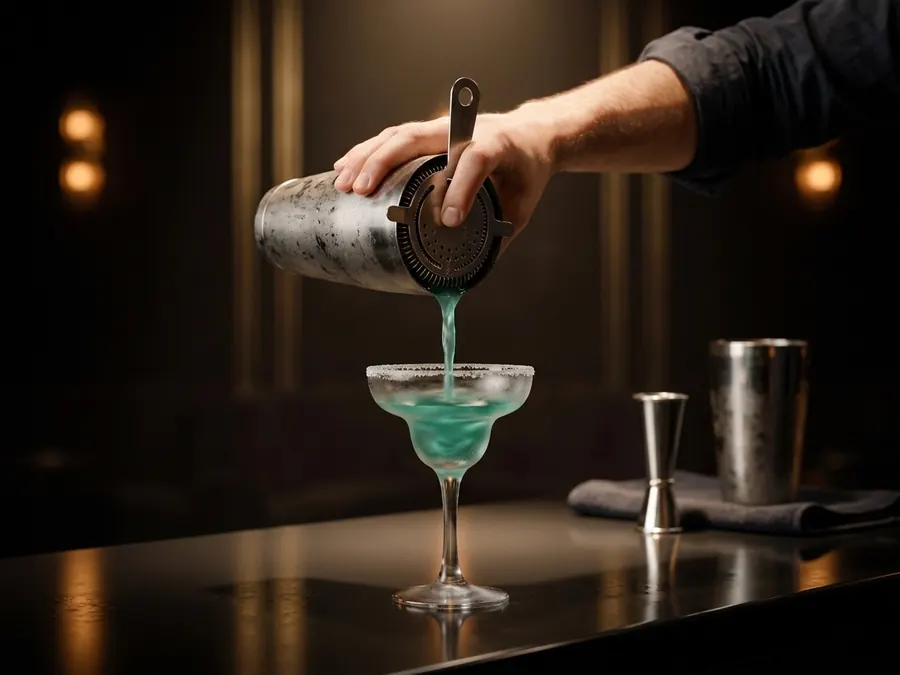
A margarita glass. The broad rim gives you a big circle of salt or sugar, and the small lower bowl keeps a frozen drink cold.
Is a Blue Margarita shaken or stirred?
Shaken. It contains citrus, juice, cream or egg, which need the force and aeration of shaking.
How strong is a Blue Margarita?
About 16% ABV after dilution, or roughly 1.3 US standard drinks (18 g of alcohol) per serve.
How many calories are in a Blue Margarita?
Roughly 165 kcal per drink, most of it from alcohol.
Can I make a Blue Margarita without tequila blanco?
Yes. Tequila Reposado is the closest substitute, though the drink will taste different.


