
History of the Dirty Martini
- Origin
- New York City
- Created
- Olive Martinis from around 1901; the brine version became popular in the 1990s
- Credited to
- John O'Connor, a New York bartender, for muddling an olive into a Martini
- Family
- Martini, savoury
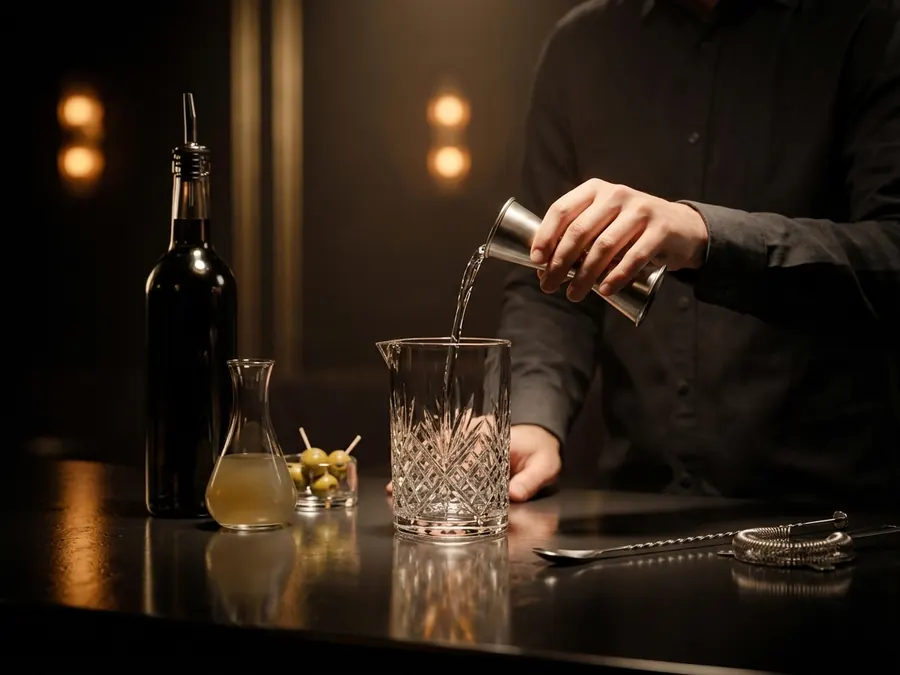
The idea of putting an olive in a Martini is as old as the drink itself. In 1901 a New York bartender named John O'Connor is said to have muddled an olive into a Martini, making it cloudy, or "dirty". The modern Dirty Martini, made with a splash of olive brine, took off in the 1990s and became a bar staple.
Fun Facts
- Franklin D. Roosevelt reportedly liked his Martinis with olive brine.
- "Extra dirty" means more brine.
- Blue cheese-stuffed olives are a popular garnish.
Variations
| Variation | What changes |
|---|---|
| Gin Dirty Martini | Gin instead of vodka |
| Filthy Martini | Caper brine or extra olive brine |
| Vodka Martini | No brine |
Dirty Martini FAQ
What makes a Martini dirty?
A splash of olive brine.
Gin or vodka?
Both work. Vodka is common today; gin adds botanicals.
How much brine?
Start with 10 to 15 ml and adjust to taste.
What glass is a Dirty Martini served in?
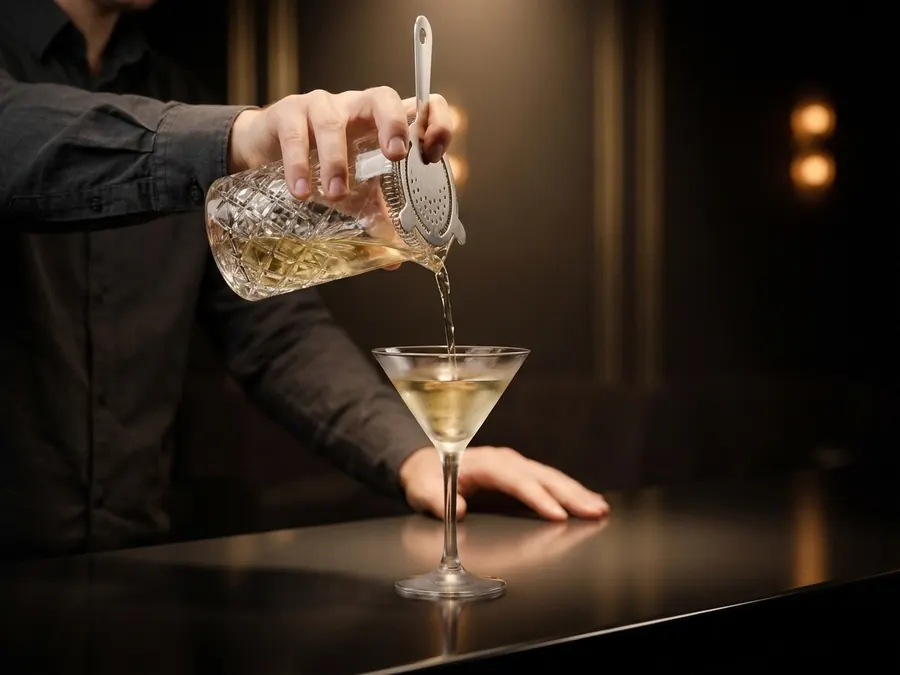
A martini glass. The open cone spreads the aroma wide.
Is a Dirty Martini shaken or stirred?
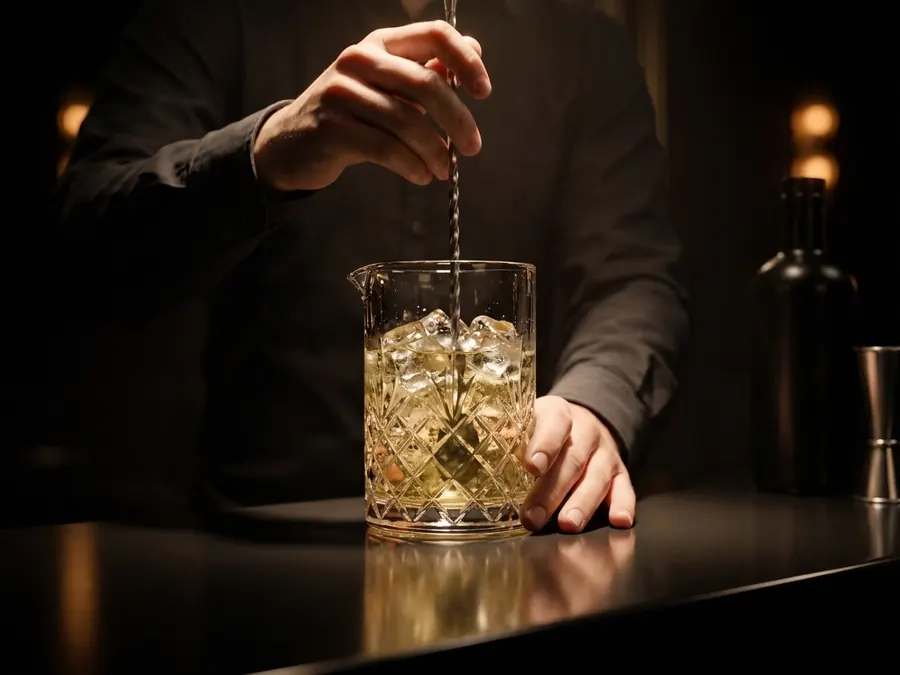
Stirred. It contains only spirits and modifiers, so stirring chills and dilutes it while keeping it clear and silky.
How strong is a Dirty Martini?
About 22% ABV after dilution, or roughly 1.5 US standard drinks (20 g of alcohol) per serve.
How many calories are in a Dirty Martini?
Roughly 145 kcal per drink, most of it from alcohol.
Can I make a Dirty Martini without vodka?
Yes. London Dry Gin is the closest substitute, though the drink will taste different.


