
History of the B&B
- Origin
- New York, USA
- Created
- 1930s
- Bottled version
- 1937
- Family
- Digestif
Bénédictine was created in Fécamp, Normandy, in 1863 by wine merchant Alexandre Le Grand, who said it was based on an old monastery recipe. Drinkers soon found it paired well with brandy.
The B&B, brandy and Bénédictine, is said to have been first mixed at New York's 21 Club in the 1930s. It was so popular that in 1937 Bénédictine released a pre-mixed B&B, which is still sold today.
- 1863
Bénédictine is created in Fécamp
- 1930s
B&B served at the 21 Club, New York
- 1937
Bénédictine releases bottled B&B
Fun Facts
- The Bénédictine bottle carries the letters D.O.M., short for Deo Optimo Maximo.
- The Palais Bénédictine in Fécamp is open to visitors.
- B&B is a popular after-dinner drink in the US Midwest.
Variations
| Variation | What changes |
|---|---|
| Bottled B&B | Pre-mixed by Bénédictine |
| Bobby Burns | Scotch, vermouth and Bénédictine |
| Vieux Carré | Rye, cognac, vermouth and Bénédictine |
B&B FAQ
What does B&B stand for?
Brandy and Bénédictine.
How do you serve B&B?
Neat in a snifter, or over one ice cube.
Can I use cognac?
Yes, cognac is the classic brandy for it.
What glass is a B&B served in?
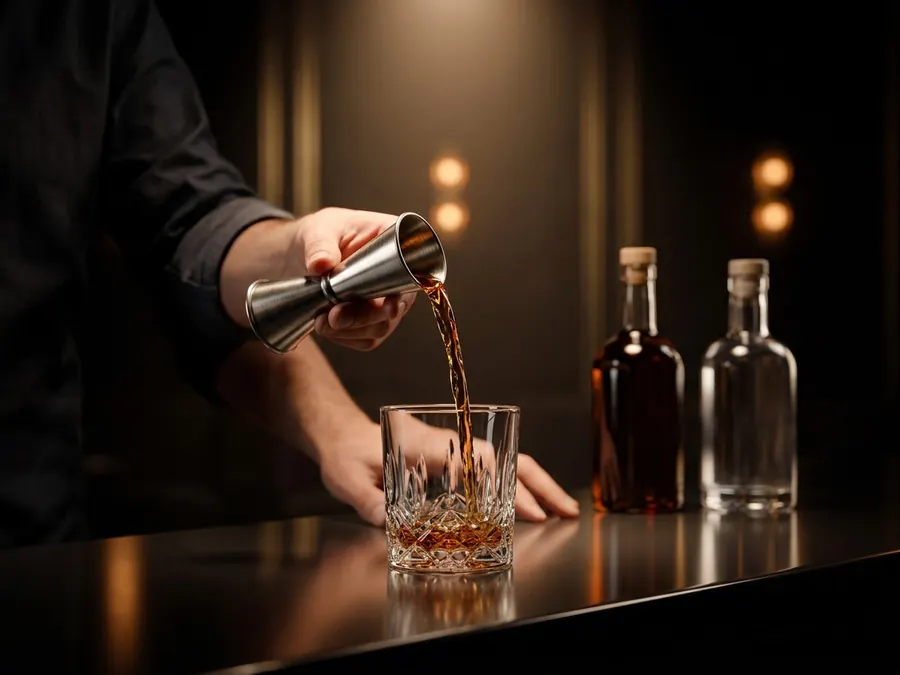
A rocks glass. The wide mouth puts the aroma of a citrus twist right under your nose, and the heavy base survives muddling and stirring in the glass.
Is a B&B shaken or stirred?
Neither. It is built directly in the glass and given a gentle stir.
How strong is a B&B?
About 40% ABV after dilution, or roughly 1.4 US standard drinks (19 g of alcohol) per serve.
How many calories are in a B&B?
Roughly 171 kcal per drink, most of it from alcohol.
Can I make a B&B without cognac?
Yes. Bourbon is the closest substitute, though the drink will taste different.


