
History of the Shaft
- Origin
- Calgary, Canada
- Created
- Around 2000
- Credited to
- Mark Smith, The Living Room
- Family
- Coffee cocktail
The Shaft is credited to Mark Smith, who made it around 2000 at The Living Room restaurant in Calgary. It started as a quick caffeinated pick-me-up shot, built rather than shaken, and spread through bars in Western Canada. The name is said to come from the 1971 detective film Shaft.
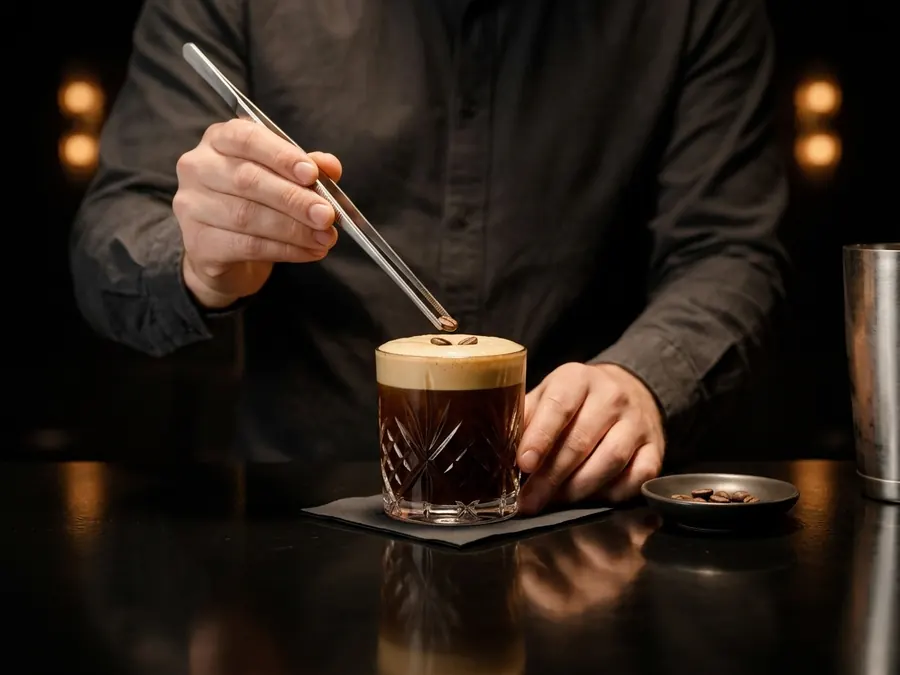
Today it is usually served longer, over ice in a rocks glass: vodka, coffee liqueur, a shot of espresso and Irish cream. Think of it as an Espresso Martini on the rocks with a creamy swirl.
How to Get It Right
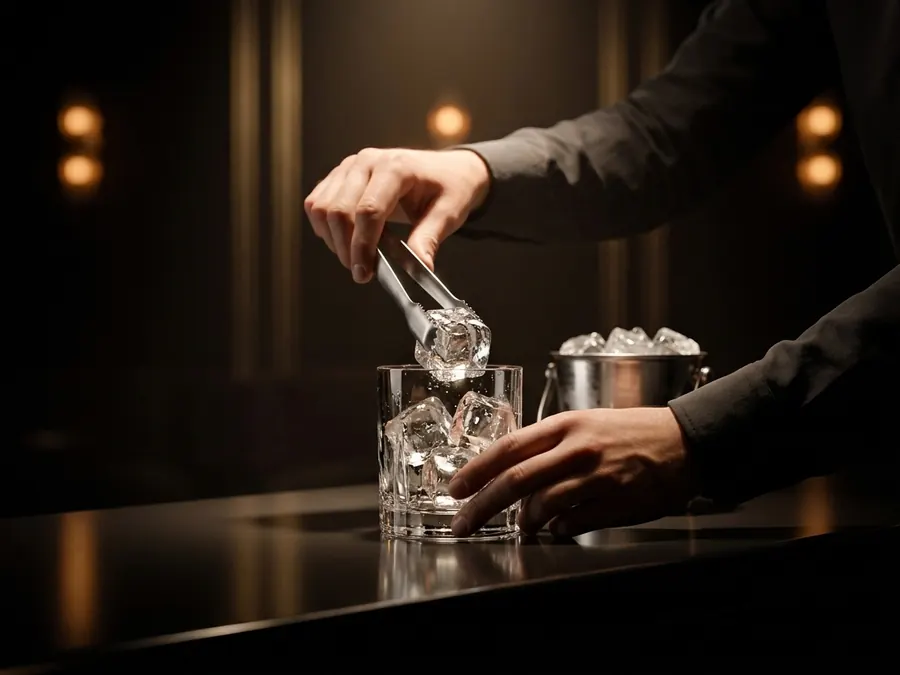
- Pull the espresso fresh and let it cool for a minute so it does not melt all the ice.
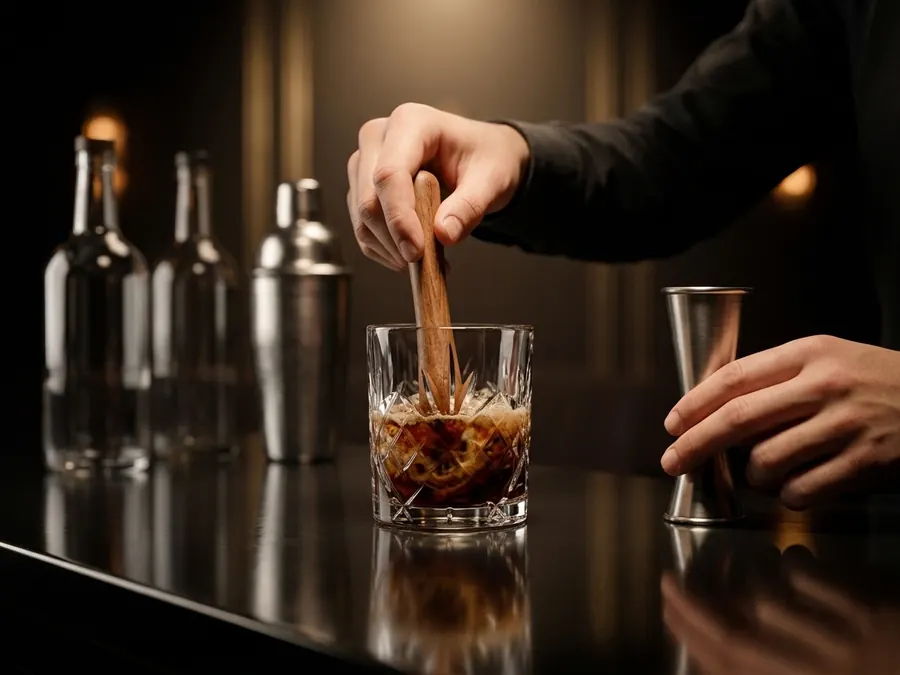
- Pour the Irish cream last and stir only once for a marbled look.
- Cold brew coffee works if you have no espresso machine.
Variations
| Variation | What changes |
|---|---|
| Espresso Martini | Shaken and served up, no cream |
| Mudslide | Cream instead of espresso |
| Carajillo | Licor 43 and espresso |
Shaft FAQ
What is in a Shaft cocktail?
Vodka, coffee liqueur, espresso and Irish cream over ice.
Is the Shaft a shot?
It began as one, but today it is usually served over ice.
Can I use decaf?
Yes. The flavour comes from the coffee, not the caffeine.
What glass is a Shaft served in?
A rocks glass. The wide mouth puts the aroma of a citrus twist right under your nose, and the heavy base survives muddling and stirring in the glass.
Is a Shaft shaken or stirred?
Neither. It is built directly in the glass and given a gentle stir.
How strong is a Shaft?
About 18% ABV after dilution, or roughly 1.1 US standard drinks (15 g of alcohol) per serve.
How many calories are in a Shaft?
Roughly 184 kcal per drink, most of it from alcohol and sugar.
Can I make a Shaft without vodka?
Yes. London Dry Gin is the closest substitute, though the drink will taste different.


