
History of the Diamondback
- Origin
- Baltimore, USA
- First printed
- 1951
- Family
- Strong stirred drink
- Base
- Rye and apple brandy
The Diamondback is credited to the Lord Baltimore Hotel and appeared in Ted Saucier's 1951 book Bottoms Up. It was nearly forgotten until craft bartenders rediscovered it in the 2000s.
It is simple and strong: rye, apple brandy and yellow Chartreuse. The Chartreuse brings honey and herbs, and the apple brandy adds fruit.
How to Get It Right
- Use a 50% ABV rye and bonded apple brandy if you can.
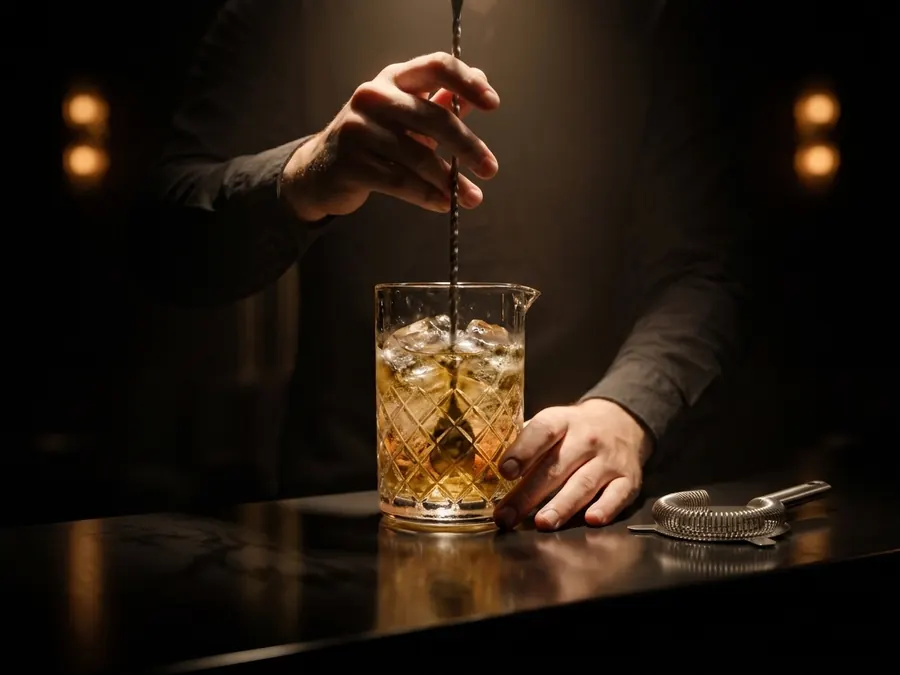
- Stir long and cold; this drink has no juice to soften it.
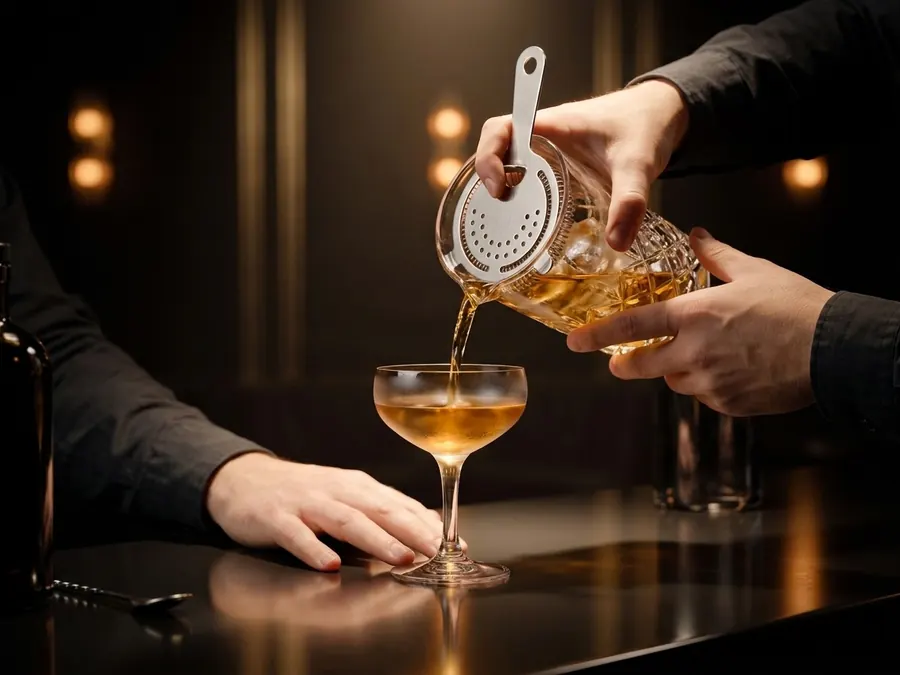
- Serve in a chilled coupe, or on a large cube to sip slowly.
Variations
| Variation | What changes |
|---|---|
| Widow's Kiss | Apple brandy, Bénédictine and Chartreuse |
| American Trilogy | Rye and apple brandy Old Fashioned |
| Jack Rose | Apple brandy sour |
Diamondback FAQ
What is in a Diamondback?
Rye whiskey, apple brandy and yellow Chartreuse.
Is it strong?
Yes. It contains no mixer, only spirits and liqueur.
Can I use green Chartreuse?
It works but is more intense. Yellow is the classic.
What glass is a Diamondback served in?
A coupe. The stem keeps your hand away from the cold drink, and the curved rim makes it far harder to spill than a V-shaped martini glass.
Is a Diamondback shaken or stirred?
Stirred. It contains only spirits and modifiers, so stirring chills and dilutes it while keeping it clear and silky.
How strong is a Diamondback?
About 29% ABV after dilution, or roughly 2.2 US standard drinks (30 g of alcohol) per serve.
How many calories are in a Diamondback?
Roughly 238 kcal per drink, most of it from alcohol.
Can I make a Diamondback without rye whiskey?
Yes. Bourbon is the closest substitute, though the drink will taste different.


