
History of Death in the Afternoon
- Origin
- Ernest Hemingway
- Created
- By 1935
- First printed
- So Red the Nose, or Breath in the Afternoon, 1935
- Family
- Sparkling
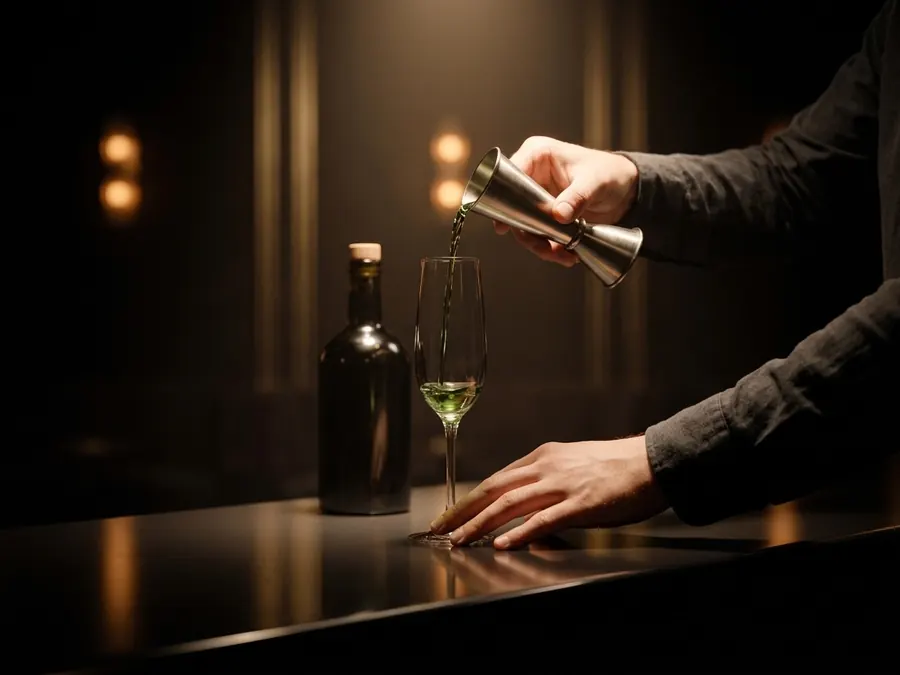
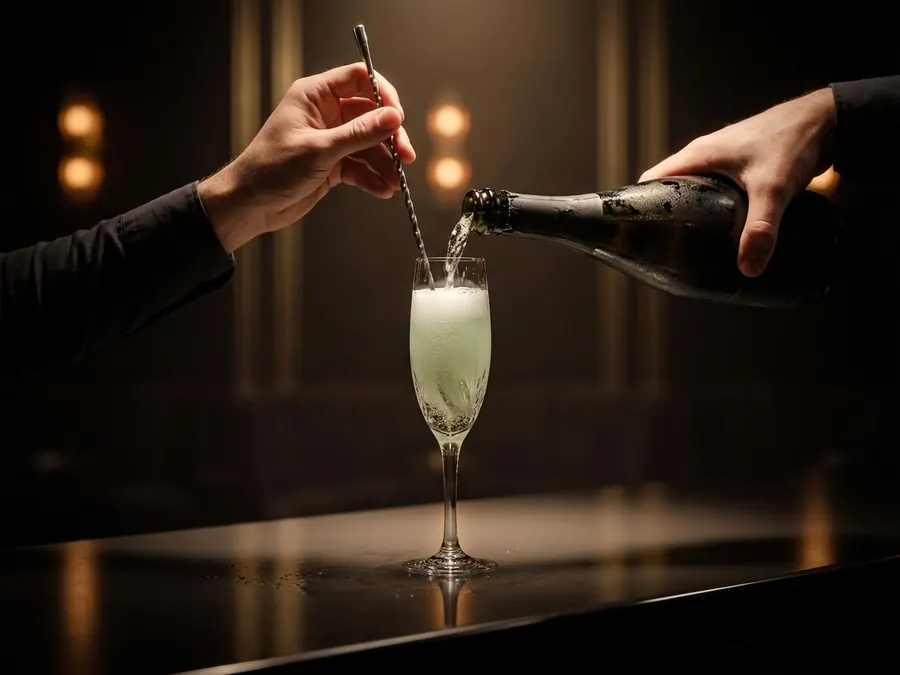
Ernest Hemingway contributed this recipe to a 1935 book of cocktails by celebrity authors. He instructed drinkers to pour a jigger of absinthe into a Champagne glass and add iced Champagne until it reached the proper opalescent milkiness, then to drink three to five slowly. It shares its name with his 1932 book about bullfighting.
Fun Facts
- The absinthe turns cloudy as Champagne is added.
- Hemingway lived in Paris when absinthe was banned in France.
- It's very strong despite its delicate look.
Variations
| Variation | What changes |
|---|---|
| Death in the Gulf Stream | Hemingway's gin and lime drink |
Death in the Afternoon FAQ
What is in Death in the Afternoon?
Absinthe and Champagne.
Who created it?
Ernest Hemingway.
Why does it go cloudy?
The anise oils in absinthe come out of solution.
What glass is a Death in the Afternoon served in?
A champagne flute. A narrow surface keeps bubbles in the wine longer, and the column shows off the stream of fine bubbles.
Is a Death in the Afternoon shaken or stirred?
Neither. It is built directly in the glass and given a gentle stir.
How strong is a Death in the Afternoon?
About 19% ABV after dilution, or roughly 1.5 US standard drinks (21 g of alcohol) per serve.
How many calories are in a Death in the Afternoon?
Roughly 153 kcal per drink, most of it from alcohol.


